





 Markets
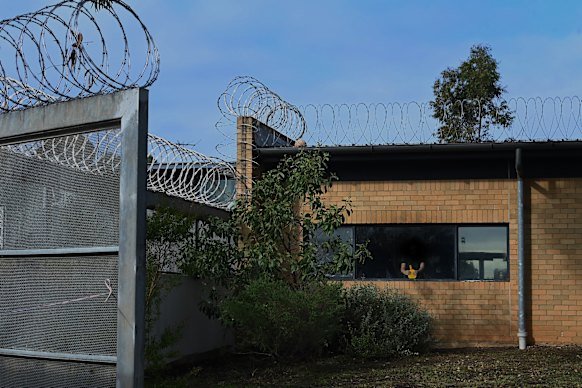
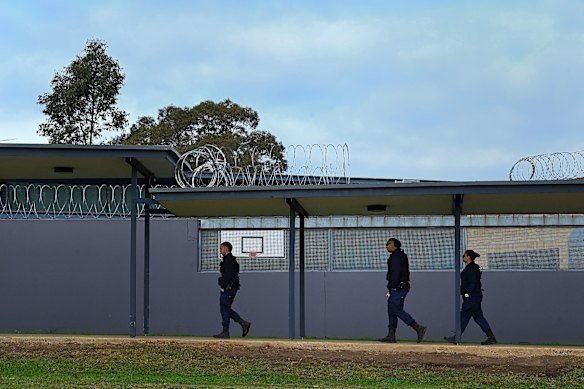
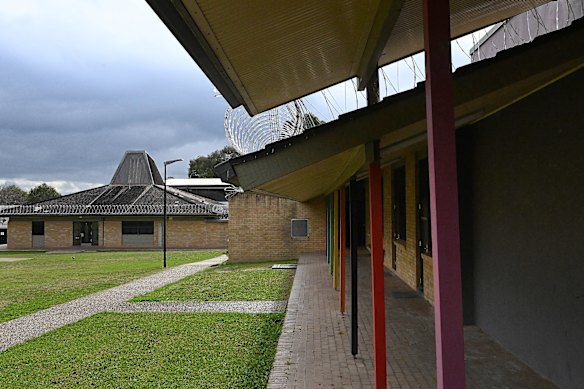
The youth detention centre in south-west Sydney is surrounded by barbed wire. Incident Response Team officers wearing stab-proof vests patrol the ground. Children – the youngest aged 12 – have been charged with offences ranging from shoplifting to murder.
None has been convicted of a crime.
On the day the Herald visited Reiby Youth Justice Centre in Airds, one young woman had been on remand for more than two years for murder after allegedly stabbing her younger sibling.
Another girl had been there for more than a year, charged with murdering a fellow exchange student from China. However, the average stay in youth detention across NSW is 13 days.
In March 2026, 80 per cent of young people in custody were on remand awaiting the outcome of their court matters. On average, fewer than 4 per cent of young people on remand receive a sentence.
Experts are asking if their time behind the barbed wire is a lost opportunity – for both the state and the children. They say punitive detention fails to reduce youth crime.
While the state’s six youth detention centres offer rehabilitation programs, the short stays make it hard for the programs to help the children on remand. High reoffending rates for those children and those serving time raise questions about the programs’ efficacy.
As other jurisdictions close detention centres altogether, NSW has announced a record funding injection and the addition of 85 beds.
Cuffed, X-rayed, and admitted to custody
Children at Reiby are offloaded from a secure van into a steel cell, its thick windows scratched by decades of disgruntled detainees.
They’re X-rayed for contraband. This newly funded technology spares children the indignity of a strip-search, though the machine’s radiation limits scans, meaning frequent flyers may still be hand-searched.
From there, they are issued track pants and a top, the colour signifying their residential area.
Reiby was criticised in a recent custodial inspection report for issuing used, stained underwear. Used underwear is now thrown out and children are issued only new underwear. The children are given the same bottle-green shoes issued at adult prisons.
Once processed and uncuffed, they enter the main residential area consisting of single-storey ’70s brick buildings dotted around a lawn.
There’s a pool, a basketball court and children participating in equine therapy, leading horses over small obstacles. The centre also has a pre-release unit for young males with extreme behavioural challenges.
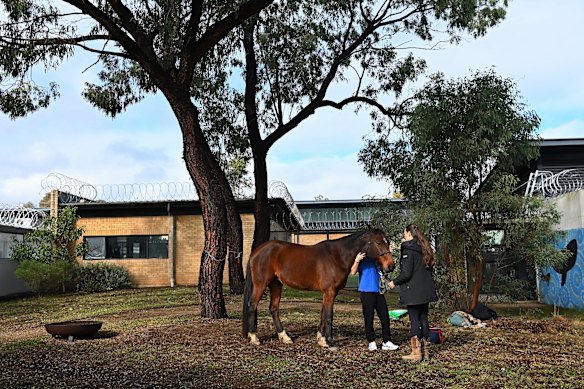
Buildings are topped with wire and staff unlock immense steel gates separating the grounds.
Reiby, the state’s only dedicated long-term holding facility for females, houses girls aged 10 to 21 and boys aged 10 to 15.
Of the 16 young people there – seven boys and nine girls and young women – five are Indigenous, a 30 per cent over-representation. The centre has 55 beds, but it usually operates at half capacity. Like the state’s other youth detention centres, it holds children on remand and those serving sentences.
New beds and heightened security
Centres across the state are undergoing major upgrades following a record $138 million injection over four years in staffing and infrastructure.
The state is adding 85 beds as it grapples with youth crime, stricter bail laws, and changes to doli incapax, which make it easier for prosecutors to prove children criminally responsible.
The total number of young people in detention has remained relatively stable over the past five years: 220 were children in custody as of March this year, according to Bureau of Crime Statistics and Research data.
The upgrades were overdue. A recent report by the Inspector of Custodial Services found Dubbo’s Orana Youth Justice Centre was in such disrepair that it was “not a suitable place” for staff or detainees. Some accommodation units were closed for months due to a “noticeable sewerage problem”.
Funding has also added 70 Incident Response Team officers. Previously deployed at only two centres, they now patrol all six centres in dark armoured clothes and stab-proof vests, carrying handcuffs and rescue tools to cut material if a child tries to hang themselves.
In the past year, hundreds of contraband items, including a shiv made from a deodorant bottle, homemade knives, mobile phones, lighters, vapes and cigarettes, were seized across the state.
At Reiby, when the Herald visited, six officers were on duty to oversee 16 children.
Programs and remand
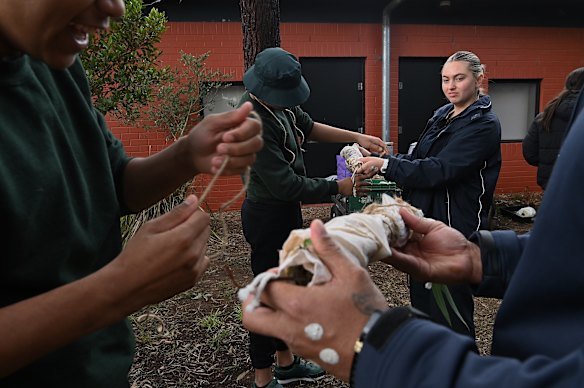
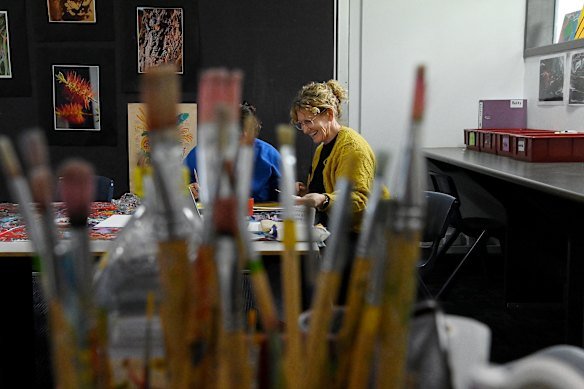
Reiby offers scores of programs and activities, from equine therapy to Indigenous yarning circles, which centre manager Rebecca Edwards said helped children develop important life skills to help them return to the community.
“There’s a lot of scope to really do good things for the kids here,” she said.
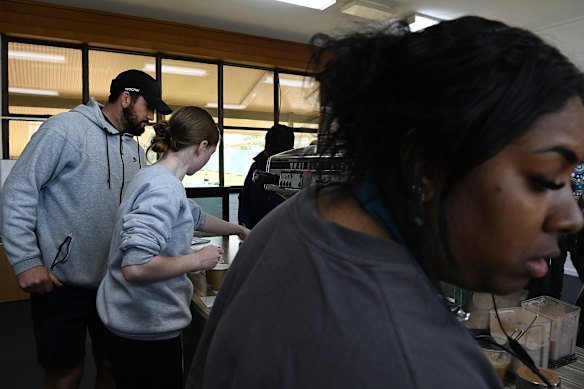
The young woman charged with murdering her sister is one of the few detainees able to make use of the centre’s programs. Since being placed on remand, the now 20-year-old has learnt cafe skills, gained her construction industry White Card and traffic control certificate, completed high school, and enrolled in a university bridging course.
But she is an outlier. Children spent an average of 13 days on remand in 2025-26, while Indigenous children averaged 18 days. Nearly 24,000 children spent less than two days in custody.
Eighty per cent of kids in custody in March were on remand, a 24 per cent increase across five years, according to BOCSAR data.
But once they face court, children are being sentenced at lower rates. The proportion moving from remand to sentenced custody has decreased by 31 per cent over the past two years.
Reiby’s Dorchester School principal, David Taylor, said staff do their best with the limited time they have.
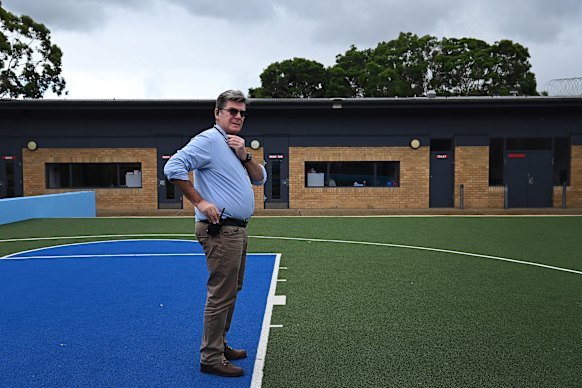
“One of the things that we don’t do anywhere near as well as you might want is transition back to where they’re going,” he said. “There’s not [a lot] of resourcing around that.”
Reoffending is common. Nearly one-third of children with a court appearance reoffended within 12 months in 2024, rising to two-thirds for those released from sentenced custody, according to BOCSAR.
Pointing to 15-year-old Emma*, who has been in the centre four times over the past two years, Taylor wondered what would be different when she leaves. “Will she default to what she was like before she was in?”
Sitting in her cell, with a single bed, a fixed stool, an encased TV and a heavy door, Emma says she is likely to reoffend, joking her room is reserved. “They save it for me,” she said.
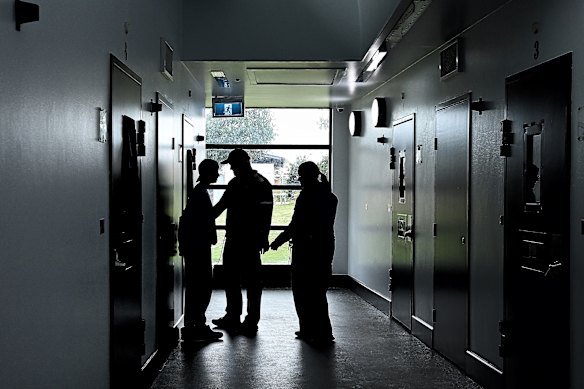
On her wall are her paintings of forests, wolves, and Chinese characters she’s learning to write.
“It’s better in here than out there,” she said, because inside there’s “no drama, nothing happens”. She said her home life was abusive, but she wanted to go home to care for her younger sibling.
Seeing kids repeat these patterns is tough for Aboriginal mentor Mary Chatfield.
“You just start to build a really positive relationship, and then they’re gone,” she said. “They come and go.”
Those who stayed for a few months were less likely to reoffend, she said, noting others joined gangs with those they met inside.
Surge in gangs, violence
While youth crime rates have remained largely stable, violent crime offences have surged.
The number of children in custody for murder jumped by 30 per cent since last year and 37 children were in custody in March charged with homicide. A further 38 were charged with burglary – a 33 per cent decrease – and 33 were charged with assault.
Police warn of escalating violent crime in regional areas, where balaclava-clad children break into homes armed with machetes, steal cars and set them alight, leaving residents living in fear.
Children film the violence for social media clout, uploading photos of their crimes and, in terrifying examples, posing with weapons over occupants’ sleeping bodies.
Teenagers are also recruited via encrypted messaging as contract killers, setting up cars with murder weapons for organised crime groups and shooting houses.
Dorchester School teacher Lucho Valeo said children were being drawn into crime at a younger age by gang ringleaders.
“These evil people, they just use the little kids to do the dirty work … pushing it onto younger and younger kids as they’re more easily influenced,” he said.
“The more street cred they get, the more dirty stuff they do, but they’re not old enough, mature enough to know.”
Rising gang affiliation is a huge concern for staff. One young boy, giggling, is scolded by staff after trying to flash a gang sign at the camera.
“There’s so much of it in community now,” Lucho said. “[Kids] can’t stay away from it. They are absorbed into it through affiliation.
“Rarely does it come in [to Reiby], but when it does, it can get pretty feral.”
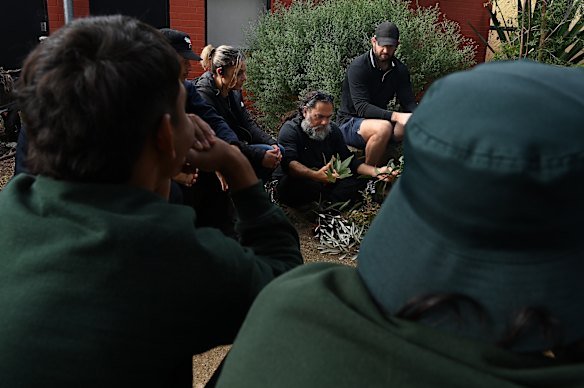
The youth who flashed the gang sign allegedly assaulted another detainee the day before the Herald’s visit, earning 12 hours of room confinement. “I was in my room all day,” the boy said. “It felt shit.”
Those under 14 can be confined to their room for 12 hours, while older youth can spend 24 hours in confinement.
Over 5000 punishments were doled out across centres in 2024-25, according to the Inspector of Custodial Services. Confinement accounted for more than 3500 instances, most lasting under three hours.
The report noted use of force was a concern, exceeding 1500 incidents in 2024-25.
Diversion, intervention, prevention
In 2003, Scotland had the highest murder rate in Europe. Now, the homicide rate sits at 8.1 per million in population, compared with Australia’s 10 per million. The greatest reduction in homicide victims over the past 20 years has been among young people aged 16 to 24.
By 2024, the country reached a milestone of no one under 18 in custody.
Community Justice Scotland CEO Karyn McCluskey said the major focus was early prevention. The country targeted driving factors such as school truancy to reduce “recreational violence”. The country also introduced a disease model for children exposed to violence or neglect.
“We have a whole-of-child system, which thinks about need and not deed,” she said. “If you get it right, it’s as close to being magic without being magic.”
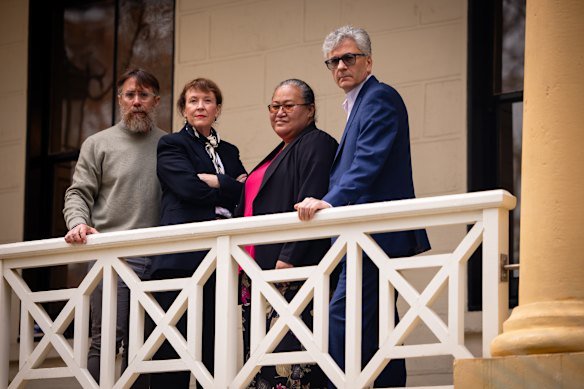
International experts, including McCluskey, flew to Sydney last week to appear before a federal Senate inquiry into Australia’s youth justice system, explaining how their jurisdictions drastically reduced youth crime and reoffending.
The experts from Hawaii, Spain, Scotland and New York took similar approaches: placing children in behavioural programs in home-style accommodation that address health, schooling and family needs. Family preservation is a major focus; the centres are rehabilitation-first, and secure facilities are used only as a last resort.
They spend at least three months healing and learning skills, focusing on wellness and families are supported to help kids return home. In every jurisdiction, offending dropped significantly, and cost savings were tremendous.
“We saved so much money by not putting them in institutions,” former New York City correction commissioner Vincent Schiraldi said. “You can have a society where you lock way fewer kids up and still be safe if you do it.”
Australia has emulated some of Scotland’s approaches, youth justice manager Janet Killgallon said, including through the Cockatoo Initiative, which supports at-risk children (as early as primary school) who are disengaging from school, exposed to violence, or using drugs or alcohol.
Killgallon heads the newly created whole-of-government initiatives team, overseeing approaches across the broader Department of Communities and Justice. She said she expected the expansion of bail accommodation and support services in regional areas would help reduce the number of children on remand.
“Breaching bail is a key reason children cycle through, and it’s often through no fault of their own,” she said. Some families were not willing to adhere to conditions or homes were not deemed suitable.
But David McGuire, head of Spain’s youth justice not-for-profit Diagrama, said Australia had not done enough. McGuire last visited in 2015 to give evidence at the Northern Territory royal commission into youth detention.
“Nothing has changed,” he said. “It’s been 11 years, and the rest of the world has changed, but I cannot see any change [here].”
McGuire said children at Diagrama’s reeducation residential homes were visited by their sentencing judge and a prosecutor to check on their progress and ensure the program is working.
“We are all on the same page,” he said. “Here, judges are not happy with the police. The police are not happy with the judges. The government is not happy with anyone. The lawyers and the Aboriginal community are not happy. Everybody agrees it’s not working.”
Three-year battle and a new portfolio
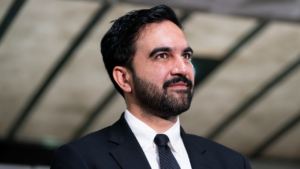
Youth Justice Minister Jihad Dib is passionate about his ministry, which stands as an independent portfolio for the first time in more than a decade. He visits centres regularly and keeps a succulent plant propagated from a detention centre horticulture program on his desk.
“I’d love to see no kids in detention because they’re not committing crimes to begin with,” he said.
The former Punchbowl Boys’ High principal is quick to dispel accusations he’s soft on crime. “There has to be a consequence,” he said, adding consequences should be about “changing behaviour, not seeking revenge”.
“We’re dealing with young people whose lives are complex. These kids are not angels, but they’re also not beyond repair.”
He’s proud of a recent $5 million boost for local projects to reduce crime and keep kids engaged with community projects, on top of $88 million towards early intervention and diversion programs over four years and expansions to bail accommodation services.
“That is a culmination of three years of trying to convince people that we could try things a little bit differently, that we can actually help young people,” he said.
Importantly, Dib agrees past approaches have failed. “We’ve got to say what we can do differently, and how we do it differently, because it’s not working the way that it’s done.”
Start the day with a summary of the day’s most important and interesting stories, analysis and insights. Sign up for our Morning Edition newsletter.
Read the full article here