




 Markets
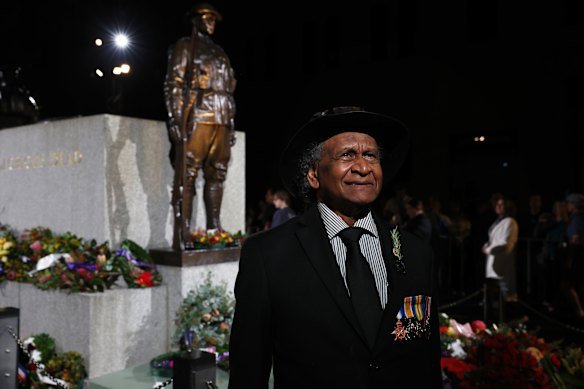
Julia Baird’s insightful article on the Anzac Day booing of Uncle Ray Minniecon (“Ray’s grace answers the graceless”, May 2) reveals the concerning rise in the insidious movement to shut down the voices of Indigenous Australians. What better time than now for all Australians to make a stand and counteract this outbreak of racism around the country. What better way than to follow Uncle Ray Minniecon’s dignified example and gracefully call out the haters. Love is stronger than hate and it is to be hoped this indisputable truth brings comfort to Uncle Ray Minniecon, his family and the wider Indigenous community. Joy Nason, Mona Vale
People like Uncle Ray Minniecon are leaders. Three generations of military service in the days when Aboriginals could not vote and displacement was ripe has earned the right to deliver Welcome to Country along with undivided respect. His description of what the Anzac ceremony means to him is priceless, “It’s like stopping traffic to listen to a poem”, and “Dig our toes into the soil we stand on”. I can only think that booing at such an event comes from a place of extraordinary ignorance. Might I suggest a 12-month conscription to our armed forces stationed in the Northern Territory for those who wish to go rogue and break the sacrament at these special ceremonies? Bruce Hall, Avalon
Julia Baird’s truthful and sensitive treatment of the senseless racist booing on Anzac Day dawn services was refreshing. The response from one of the targets of that racist booing was humbling. To see such a slight as a God moment, or the pricking of a boil, raises the ugly moment above a personal attack to a higher plane, a moment for us all to confront the hate. Uncle Ray sounds like a great bloke, a selfless true Australian. Those who show such disrespect to our First Australians should not be allowed to do so from the dark, or behind hate-filled charters of nonsense. We have to shine the light on their ignorance and misunderstanding. These far-right tendencies to blame the blameless, to scapegoat, to target Indigenous people or migrants, are not worthy of our indifference. We cannot stand by while these thoughtless, rude thugs attack our tolerant caring way of life. Whether it be a politician or a “pus-filled boil” needing a prick, hate has no place in our society. Geoff Nilon, Mascot
Julia Baird once again gave readers a wonderful opinion piece wherein she concludes with Uncle Ray’s quote “Racism is not Aboriginal problem, it’s a whitefellas problem, and we need to sort it out.” Two subjects dominated our Saturday issue of the Herald, both on racism, against 4 per cent of our population. The first 1 per cent is our Jewish community and relates to religious racism, which has increased with Israel’s invasion of neighbouring countries having a different religion. While the official 3 per cent (Aboriginal blood flows in many other Australians, often unknown to them, resulting from the stigma and raping of Indigenous women by early settlers), this racism is due to the colour of the skin of/and past ownership by our Indigenous people. Racism exists because us whitefellas think we are supreme, but there is no difference between races, it’s only what we think. Let us show we are now mature Australians as it’s time to think better of other humans and, particularly, our Indigenous population and close the gaps without further delay. Brian McDonald, Willoughby
Let’s be honest – no other group of people in Australia have experienced racism as long and as consistently as Aborigines. Worse still is that survey after survey has indicated that it’s not just white Anglos displaying racism towards them but all ethnicities. For far too long, we have allowed it to flourish without calling it out when we hear or see it in action. If you are a young Aboriginal walking into a shop, there is a high probability you will be more closely watched than a white person. Most Australians have probably never met an Indigenous person yet they have preconceived negative attitudes about them. They have had to endure racial discrimination for about 238 years since the First Fleet arrived – longer than any other group. Con Vaitsas, Ashbury
Ceremony is ancient
Tony Wright’s personalised explanation of Welcome to Country hits the mark (‴This is my country. But you are welcome to stay‴ , May 2). It wasn’t created for those who settled here after 1788. It has always been a ritual observed by Aboriginal groups welcoming other Aboriginal groups to their country. It’s not aggressive, it’s warm and inclusive and is a reflection of a culture which has been part of this land for tens of thousands of years. Lyn Savage, Coogee
There couldn’t be any better justification for honouring and accepting Welcome and Acknowledgement of Country than Tony Wright’s wonderful article. What a beautiful story to place this issue in perspective. RIP Mrs Wallaby. Patrick McMahon, Paddington
Coalition’s betrayal
The Coalition’s constant past and present attacks on the Labor Party’s endeavours to tackle climate change (“People power carbon-dates Libs”, May 2) must rate as one of the costliest and most inane betrayals of the Australian population. If the federal government had retained the carbon tax and encouraged renewal energy during the 2013 to 2022 period, when the Coalition was in power, Australia would be a world leader in the fight against climate change. The active discouragement of policies to fight climate change by the Coalition at present, despite the undisputed existential threat posed, is incomprehensible and will hopefully ensure that they remain in the political wilderness for ever more. Alan Morris, Eastlakes
Peter Hartcher’s article is welcome news. The surge in batteries and EVs means that the grid is now at a turning point, and we may have seen the high point of energy prices.
We can at last, at long last, start to see real progress in addressing climate change. The main threat to that will be the Coalition, which instead of moving to the centre as Liberal party elders wished, moved further hard-right in lock-step with their fossil fuel and media backers, got rid of the net zero target and embraced Trump-like policies nearer to Pauline Hanson. While some might see that as suicidal, Trump’s re-election aided by “alternative facts” demonstrates just how dangerous “alternative facts” can be in the age of the internet and social media. What is at stake here is truth, and it is by no means certain that truth will win. Gary Barnes, Mosman
It seems most Australians have woken up to the Liberal Party. It’s unfortunate that it has taken so long. The Libs would have known that climate change was real, but it didn’t suit their selfish agenda. They put corporate Australia and personal gain ahead of the welfare of our country intentionally. Their refusal to move with the times was unsustainable, though it did delay necessary action on climate change to our detriment. Ironically, we can thank Trump’s illegal war for focusing the world on renewable energy. It’s now abundantly clear to anyone paying attention that the Coalition is a party of deceivers, and that reliance on fossil fuels is not an option. Graham Lum, North Rocks
Best films list has some critics
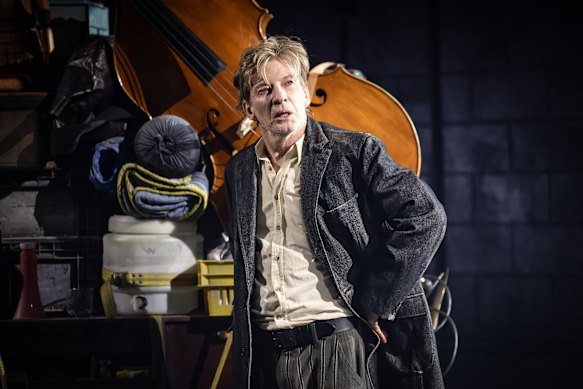
I understand that compiling lists of “the best of” is difficult (“Our best films of all time”, May 2), but I was aghast that my all-time favourite Australian film, Getting Square, didn’t make the top 50. David Wenham is currently blitzing the stage in An Iliad and his courtroom scene in the movie is iconic. One of the best movies I’ve ever seen: funny, irreverent, dramatic and very clever. Margaret Grove, Concord
Any list that doesn’t include classics like They’re a Weird Mob, The Sundowners, 40,000 Horsemen, Jedda and Storm Boy is not valid. You’d get the impression, looking at this list, that there were no Australian films before 1970. No films by Charles Chauvel? Heresy. I’d put The Adventures of Barry McKenzie, Stork and Alvin Purple in the list well ahead of some of the films that were listed. Ryszard Linkiewicz, Caringbah South
The top 50 Australian movies of all time but one of our top five actors nowhere to be seen? Cate Blanchett starred in Rowan Wood’s Little Fish (2005), a quietly stunning drama set in Cabramatta focused on addiction and redemption. Omitting this small gem and one of our biggest stars from the list – seriously? Dorin Suciu, Eleebana
Imagine leaving The Adventures of Barry McKenzie out of the top 50 films. I reckon the judges have come the raw prawn with us. Strewth, and excuse me while I go and strain the potatoes and syphon the python. Michael Deeth, Como West
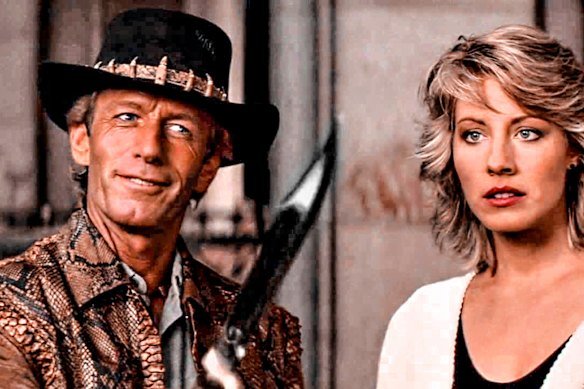
So Crocodile Dundee, an Aussie film seen and loved by millions of people around the world, doesn’t rate a mention in the Top 50? That’s not a list. Jeff Apter, Keiraville
Nature’s champion
Nature lovers say thank you as we celebrate David Attenborough’s 100th birthday on Friday (“100 years of David Attenborough”, May 2). With leadership and humility, this distinctively voiced naturalist, broadcaster and much-loved human being has brought nature into our living rooms and revealed the intricacies of the natural world, which, as it turns out, is in many ways so like ours. After all, we are part of it. In his relatable way, he has recorded worlds, some of which are sadly disappearing or already lost. His contribution is on a global scale, crossing all barriers. “Thank you” seems hardly enough. Continuing his work by safeguarding the climate and the creatures he cares about seems a more fitting response. Isabelle Henry, Ascot Vale (Vic)
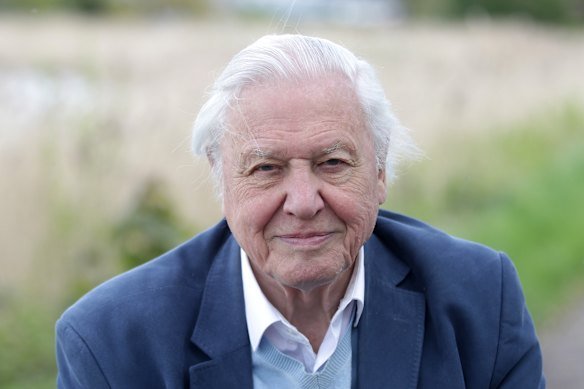
While Sir David Attenborough has been described as a legend, an icon and a prophet, I think he should be regarded mostly as a life-focused educator extraordinaire. Attenborough, who has been working for the BBC in television for some seven decades, through combining his experiential study of the cultural, animal, plant and landscape characteristics of exotic peoples and places with the knowledge of experts in relevant fields, and using television to obtain the entry to homes and institutions world-wide, has educated the world and changed its attitudes to the natural world. Tim Flannery, as reported by Nick O’Malley, credits Attenborough with being a major force in bringing to the world’s attention the “inherent value” of our environment, an awareness that can move us from destructive egocentrism to conserving eco-centrism. In the conclusion to his 2020 book A Life on Our Planet, Attenborough warned that while we have the intelligence to save our planet, we must now demonstrate that we have the wisdom and the will. Paul Casey, Callala Bay
The gift of wealth
Here is a contrary idea: most of your wealth is a windfall gift from the community, not at all hard-earned (Letters, May 2). More than half of the value of any house purchased more than 20 years ago is asset inflation, a gift from your peers and descendant generations. For longer-held properties, it can be above 70 per cent. Similarly, a large part of the wealth in your super funds is invented money created by company floats. If you want to buy a small business, you will typically pay 2.5 times earnings. When a company is floated, that ratio is usually about 18 times earnings. The difference is a gift from all the investors in the market to the owners of the floated company. Boomers have no cause for smugness about their thrift and hard work because more than half of their wealth is a windfall gift from the community. Alan Stanley, Upper Corindi
I am a Boomer made rich by tax breaks that have made my children poor. I have been handed almost surreal advantages through negative gearing and capital gains tax discounts, all of which have contributed to the now widely acknowledged housing equity imbalance. My kids shopped around for the best available parents in the 1980s (though as teenagers they would not have agreed with that), so our relative wealth has helped each of them buy their own home, just. But many Boomers didn’t have those opportunities and their Zoomer kids are thus disadvantaged. As I have told Anthony Albanese and Jim Chalmers on many occasions, reform the tax system to restore intergenerational equity, and tax the gas profits instead. Dick Clarke, Elanora Heights
Your correspondent is correct in saying superannuates pay no tax on income from superannuation. However, that’s only under specific circumstances at the tail end of a person’s life when the money is switched to what is called “pension mode”. I do hope that the government continues to provide incentives to people of all ages to contribute to superannuation throughout their lives. The fewer people who need to rely on the public purse to fund their retirement, the better. Ross MacPherson, Seaforth
It is so Australian that even popular ideas cannot be achieved without government involvement. Why aren’t the Boomers, so keen to share their good fortune with subsequent generations, organising their affairs to achieve that end without adding yet more pages to the tax law? Richard Ure, Epping
As a pre-Boomer, my generation is providing an incalculable contribution to the economy via the aged care industry. We’re doing our best. Vicky Marquis, North Sydney
- To submit a letter to The Sydney Morning Herald, email letters@smh.com.au. Click here for tips on how to submit letters.
- The Opinion newsletter is a weekly wrap of views that will challenge, champion and inform. Sign up here.
Read the full article here