






 Markets
There is growing concern in Cyprus about the outlook for tourism this year due to the war in Iran and early data showing a sharp decline in arrivals in April and the first days of May, estimated at between 30% and 40%.
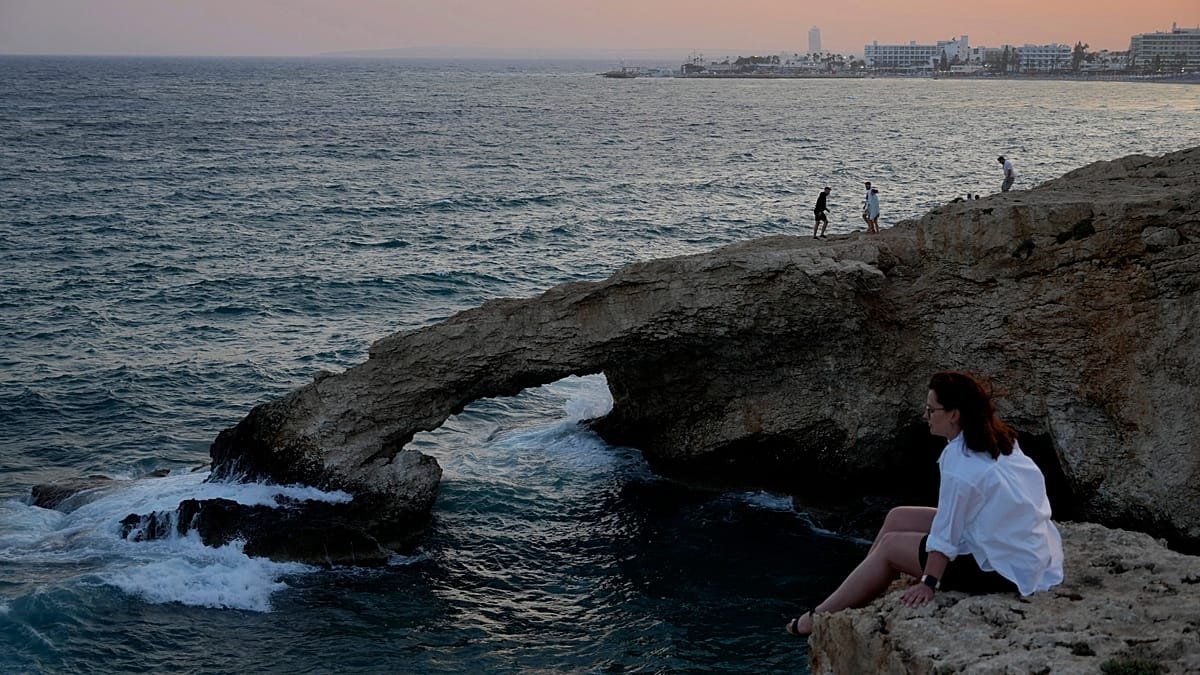
Euronews visited Ayia Napa, where the absence of tourists is clearly noticeable. Local business owners say the situation in the Middle East has had a major impact on tourism, and operators in the resort town describe this May as very different from last year’s record-breaking season.
“Normally, boats, hotels, and restaurants are very busy at this time of year,” said Sukan Samnice, a boat rental operator in Ayia Napa. “Last year, all the hotels were fully booked around this period. This year, compared to last year, visitor numbers are down by around 30–40%.”
The mayor of Ayia Napa, Christos Zannetou, said the situation in the Middle East had significantly affected tourism, but added that visitors are gradually realising that Cyprus remains a safe destination. He told Euronews that the sector is now beginning to recover.
“Compared with last year, mobility is down by about 35–40%,” Zannetou said. “However, this gap is narrowing day by day. It is also important to remember that 2025 was the best tourism season for Cyprus – especially for Ayia Napa – since 2019. So any numerical comparison should take that into account.
“Over the past two weeks we have started to see signs of recovery. We believe that people trust Ayia Napa and Cyprus as safe destinations, and booking interest appears to be picking up again.”
The tourists who have already started arriving in Cyprus do not appear overly concerned. On the contrary, many say they are enjoying the island’s sunshine, beaches, and scenery.
“We decided quite a long time ago to come here,” said a tourist from Poland. “We had several options, but in the end we were persuaded mainly by the warm weather, the sunshine, and of course the beautiful landscapes, which inspired us to paint watercolours as souvenirs.”
Some visitors, however, acknowledged the tense international climate.
“We really like it here,” said Klaus, a tourist from Germany. “Unfortunately, the global situation is quite tense at the moment, and we hope peace will prevail around the world as soon as possible.”
Tourist arrivals through Cypriot airports fell by 16% in April. However, flights from the UK in May are currently showing a 92% occupancy rate, suggesting that tourism demand is beginning to recover.
Hermes Airports, which manages Cyprus’s airports, issued a statementdetailing the situation.
“This April recorded a 16% decrease compared to April 2025, representing approximately 95,000 fewer arriving passengers,” the statement said. “Aircraft load factors averaged 76% across both airports, down from 83% during the same period last year.
“Looking at the current summer season (April–October), airlines have made certain adjustments to their schedules. Overall seat capacity has been reduced by no more than 5% – approximately 600,000 seats – despite expanded flight programmes planned for September. Passenger numbers for this period are expected to decline by around 9%, equivalent to roughly 450,000 fewer arrivals.
“That said, there are some encouraging signs. Over the past two weeks (since 20 April), arrival load factors have improved to between 80% and 85%. Key tourism markets such as the UK and Poland are performing particularly strongly, with load factors exceeding 90%.
“Cyprus’ connectivity remains robust, with 54 airlines linking the island to 165 destinations across 42 countries. Notably, most of the recent adjustments involve fewer reductions in weekly frequencies rather than the cancellation of routes.
“For May, indicative figures show strong activity from major markets: the UK averages around 30 inbound flights per day with a 92% load factor; Israel around 20 daily flights at 60%; Poland nine flights per day at 93%; and Germany eight daily flights at 86%”
Read the full article here