





 Markets
“She’s up there now, she’s in no pain.”
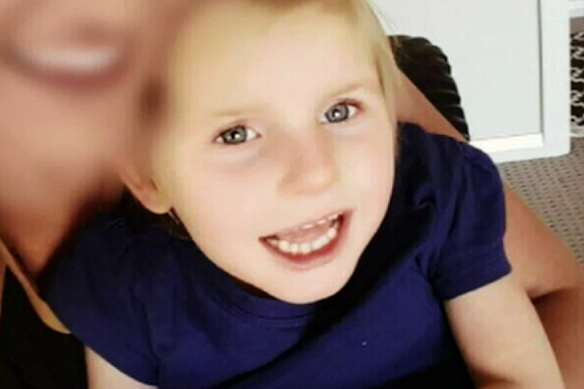
Aaron Paul Richardson was allegedly talking of his stepdaughter, Tiffani. The 12-year-old had weighed just 7.4 kilograms when she died at her Gold Coast home some months earlier.
“We’re down here, the parents, getting f—ing smashed with the blame,” he told an undercover officer, according to Supreme Court documents released for the first time.
Richardson, 39, and his partner, Tiffani’s mother, Carrissa Scholten, stand accused of killing the girl.
It was an April evening in 2022, and Scholten had called Richardson to come home.
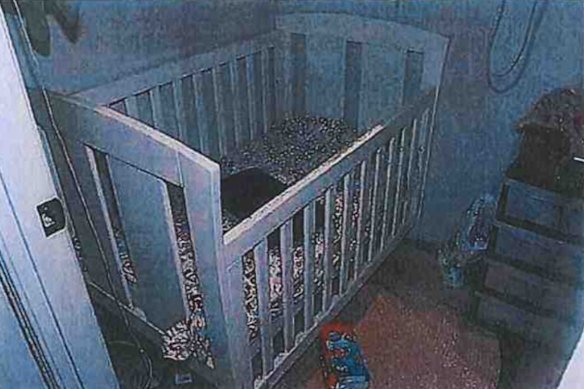
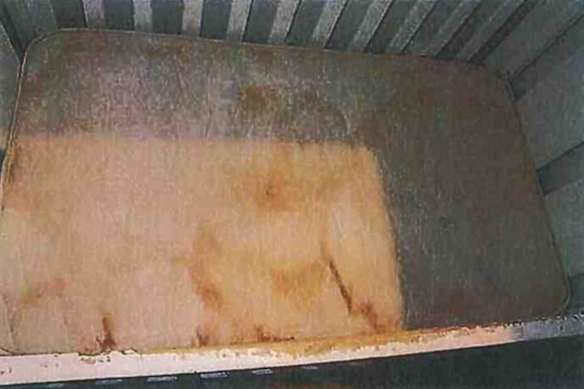
Tiffani had been in a cot in a darkened wardrobe in her parents’ bedroom for hours, the prosecution says.
Richardson made his way home and tried to revive her, he told police.
But despite his efforts, CPR didn’t work, he told an undercover officer after his arrest. “Especially when there’s just nothing, nothing at all. It was f—ed.”
He later said: “We just like left her to the last minute.”
At the age of two, the girl had been diagnosed with a genetic neurological disorder, Rett syndrome, and had developmental issues.
After Tiffani’s death, police launched Operation Uniform Zoysia, during which they spoke to members of her family.
Scholten’s sister recalled how Richardson called her that night saying: “You need to get over here ASAP.
“What?” The aunt replied.
“It’s Tiff.”
The aunt reported that Richardson sounded really distressed. He told her: “It’s not good.”
The phone call was quick, the aunt remembered. “When I arrived, I raced upstairs. I had seen [Richardson] on the driveway as I went in. He looked agitated, and I think he was worried that police would come to the house and find things he didn’t want to be found.”
Documents tendered for Richardson’s bail application, which was refused, detailed how he had a criminal history in both Queensland and NSW, including domestic violence and trafficking dangerous drugs. He was sentenced in Brisbane to three years’ jail for trafficking cocaine between April and July 2022.
“[Richardson] was pacing … I was confused about why he wasn’t up there with Carrissa,” the aunt told police.
‘I was constantly having to look after her’
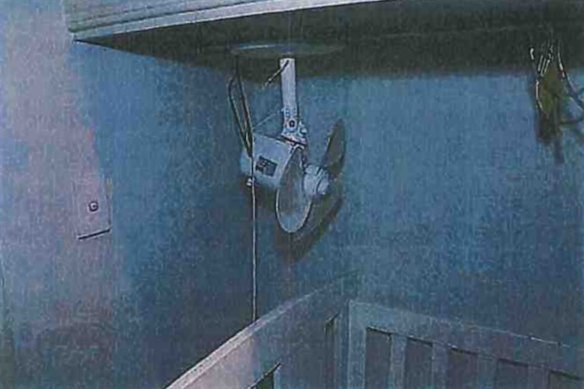
Photos of the room submitted to the court showed Tiffani’s cot was set up inside a 2.5-metre by 2.4-metre wardrobe, a fan attached to a shelf above, and a small chest of drawers nearby. There were also children’s clothes and an empty puree pouch in the en suite, and a sippy-cup lid on the vanity.
According to court documents, when Scholten spoke to a Triple Zero operator, she told them: “My daughter is dead.”
She then performed CPR on Tiffani’s frail body, telling them: “She is so cold.”
Scholten had reported checking on her at 1pm, with no further observations for more than six hours, despite the fact Tiffani was reliant on her mother and Richardson to provide for her, the prosecution submitted.
Richardson owed a duty of care to Tiffani, the prosecution submitted, whether he was the biological father or not. He had repeatedly told police Tiffani was his daughter, and that he cared for and fed her.
He spoke of their bond and said it was “putrid” that police would think he would harm his own child, according to documents. He told the undercover officer he was “constantly having to look after her”, and if they took her out to dinner, she would scream the house down.
“Like it was just, you can never actually have that family relax time. So it was always one of us on the move. So the family was sort of separated from it, but we dealt with it. We learnt how to live with it and, yeah, it worked well,” he allegedly said during the conversation.
His legal team submitted that the charges were contested, and said without making any concession to the strength of the prosecution case, there were significant triable issues.
Richardson was likely to fight the case on two grounds – duty and causation – his defence said. The prosecution would need to establish that he owed a duty to provide the necessities of life, his lawyers said, adding that he was not the biological father.

They also said Tiffani was born prematurely, and an issue would be whether malnutrition was the sole cause of death, or if her underlying condition was a contributing or primary cause.
Richardson did not seek to minimise the gravity of the allegation, his defence said, and it was not alleged that he had inflicted any act of violence upon Tiffani.
‘Medical, emotional, and physical neglect’
A haunting photo tendered to the court of Tiffani showed her body lying on a spotted blanket. She was severely emaciated, her eyes sunken and hollow.
An attending critical care paramedic said she reminded him of starving children in Africa.
One doctor who analysed Tiffani’s case after her death said in over 30 years of caring for children with Rett syndrome, they had not seen a child as emaciated as Tiffani in the post-mortem photographs.
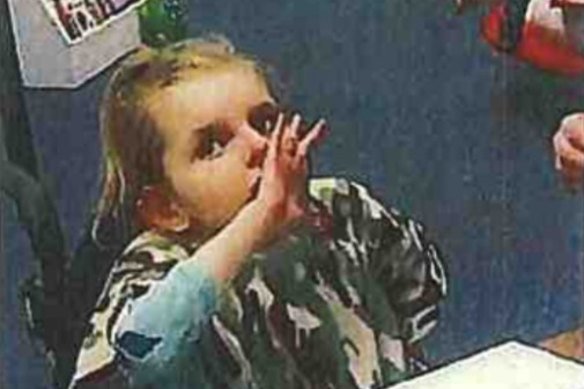
Her body was so small, paramedics had to attach defibrillation pads to her chest and back.
The morning after her death, Tiffani’s grandmother took Scholten to Starbucks to talk to her, according to documents. Scholten had made a comment she found strange – that she had bathed Tiffani after the girl had died but before calling an ambulance.
“I asked Carrissa why. Carrissa replied: ‘Because she was cold.’ I said: ‘If she was cold, and she wasn’t breathing, had she been gone for a little while …?’
“Carrissa just said, ‘Well, she was really cold.’ That’s all she could say.”
Court documents show Tiffani’s family spent $100,000 provided by the National Disability Insurance Scheme, but they could not produce invoices for an investigator.
The prosecution in Richardson’s case said Tiffani had been funded since 2019 through to her death, receiving an annual lump-sum package for her care. But there was no evidence of that funding being spent on allied health support, services, or products for Tiffani.
Her last medical contact before her April 2022 death was at the Gold Coast University Hospital in June 2019.
Tiffani attended a special school until the year before her death. Teachers there remembered her as constantly hungry and unsettled. One teacher prepared food, stocked the kitchen cupboard, and brought in second-hand clothing specifically for Tiffani. No child safety concerns were ever raised.
The prosecution submitted that Scholten had repeatedly told people that Tiffani’s life expectancy was five years – something her first paediatrician had not told her.
Between the end of the school term in December 2021 and her death four months later, Tiffani seemed to have rarely left her house, if at all, and spent most of her time in the cot, the prosecution submitted.
“She had no social interaction, learning, or developmental support. She had no medical treatment. Tiffani suffered from medical neglect, emotional neglect, and physical neglect,” documents state.
Both Richardson and Scholten’s cases remain before the court.
Start the day with a summary of the day’s most important and interesting stories, analysis and insights. Sign up for our Morning Edition newsletter.
Read the full article here