





 Markets
  Weather

Two hundred and fifty thousand new residents will live in new greenfield homes at the north-western edge of Sydney’s suburban sprawl without any community facilities, a council boss has warned, blaming a chronic lack of developer funding and an inability for councils to extract more cash.
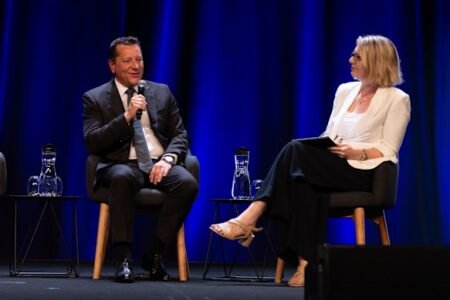
Blacktown City Council, Sydney’s largest local government by geographic size, is at the forefront of the majority of the region’s suburban growth. But at Friday’s Sydney Summit, its chief executive Kerry Robinson warned the new greenfield areas were being built to contain “no pool, there is no library, there is no meeting hall. Not one.”
That’s because the Department of Planning, Housing and Infrastructure classifies facilities like pools, libraries, community meeting spaces and indoor recreation centres as “non-essential”.
Under state law, councils can require developers building in their area to pay a levy to contribute to the cost of infrastructure – but only that which is deemed “essential”, mostly roads and water systems. A cap on these contributions was introduced in 2012 and has not been adjusted for inflation.
The impact is that cash-strapped councils cannot afford to build services that are essential for wellbeing.
“What we are doing is creating a social deficit which no one needs to recognise [or] bring to account, because it’s happening slowly,” Robinson told the summit, hosted by the Committee for Sydney think tank and supported by the Herald. “But there will come a time in the future where we’re going to look back and say, ‘How did we allow this absolutely ridiculous thing to happen?’”
Due to geography, urban sprawl – the process of turning mostly rural land into low-density housing, often without proper infrastructure – has mostly occurred around Sydney’s west. Federal Housing Minister Clare O’Neil told the conference that process baked inequality into the city’s streets.
“Urban sprawl is a quiet driver of inequality,” she said. “People living on the fringes of our big cities face warmer commutes, they face higher transport costs, and they face fewer job opportunities.
“We can choose to build more inequality into our cities, or we can choose to create a modern democratic city, where everyone gets a fair go.”
While seemingly endless sprawl once covered up a multitude of planning errors, change is coming. Aruna Sathanapally, chief executive of the Grattan Institute, said the struggles of sprawl had forced the government to focus on infill development.
“The housing situation we face now has been coming at us for a very long time, but I will say that sometimes necessity is the mother of invention. It was easier to avoid tough conversations about density when government could build infrastructure and enable sprawl.”
Robinson, who has led Blacktown’s council for 12 years, said Australia and the United States already knew what happened when fringe communities were built without infrastructure in the 1950s and ’60s: there was “tremendous isolation”.
The Morning Edition newsletter is our guide to the day’s most important stories, analysis and insights. Sign up here.
 Anthony Segaert is the Parramatta bureau chief at The Sydney Morning Herald. He was previously an urban affairs reporter.Connect via X or email.
From our partners
Read the full article here