



 Markets
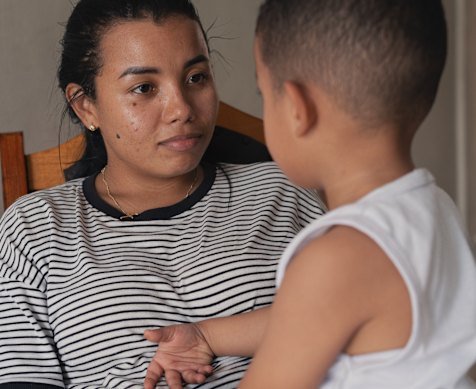
After reading yet another devastating story about surrogacy gone wrong this week, there was just one person I really needed to talk to.
This week’s horror? Two Canberra women, Melinda and Gail McCann, paid censured Melbourne lawyer Paul Norris-Ongso’s company Global Surrogacy $100,000 for a baby born in Colombia. The result? Abandoned surrogate mother with health problems. Inadequate paperwork. And an entire family in limbo, including baby Alexis.
And you can’t possibly have forgotten the separate case of Gammy. Gammy was born with Down syndrome. He was left behind in Thailand with his young surrogate mum. The Australian couple who engaged the services of the surrogate took Gammy’s twin, a girl, home with them. Turns out the dad was convicted of sex offences against girls years earlier.
There are plenty of other surrogacy horror stories and you can read some of them in submissions to the Australian Law Reform Commission now holding an inquiry into surrogacy. Sure, there is joy among the submissions. There is also immeasurable sadness.
This moment is a tipping point for surrogacy in Australia. Do we stay with the model of what we describe as “altruistic surrogacy”, doing it for love, kindness or charity? Or do we go with “compensated surrogacy”, a coded word for payment for the surrogate mother which goes beyond the bare expenses. It’s used instead of the more honest “commercial surrogacy” because that seems too much like we are buying and selling babies.
The ALRC was asked to inquire into surrogacy laws in Australia under the chairmanship of Justice Mordy Bromberg. Its report to federal Attorney-General Michelle Rowland will be delivered in a few weeks. Its advisory committee, now disbanded, looks like fanfiction for the commercial surrogacy lobby with some prominent fertility lawyers among its cast.
There were over 800 submissions, not all of them online yet, and you can see the divide: those who live in gratitude at the opportunity to be parents, and those whose experiences were marked by misery.
And Patrick Parkinson, emeritus professor of law, former dean of law at the University of Queensland and, in my view, our leading family law scholar, also made a submission. What does he think is the purpose of the inquiry? “The bottom line is probably wanting to give a lot more latitude to surrogacy in Australia … there are very strong advocacy groups for whom that is a goal.”
What does that mean? Making commercial surrogacy – or its near neighbour, compensated surrogacy – legal with checks and balances. But he doubts that any kind of scaffolding around surrogacy would ever be enforced anyway. It isn’t enforced now.
Believe me, I understand the nearly overwhelming desire to have a baby. When I met my husband, I wanted six. Fortunately, sense, my lovely spouse and exhaustion after three kids prevailed. He was also the one who had the good sense to steer me away from becoming a surrogate for my sister. He was right. I might have handed the kid over but I would never have been able to relinquish my motherhood. My sister never had kids. She died. Our relationship never recovered.
But I remained a firm supporter of surrogacy for decades, for other people, if not for me. Earlier this year, I spoke to three women who changed my mind. Australia finally apologised for the pain of forced adoptions, but these women explained how much surrogacy has in common with that barbaric practice.
Patricia Harper, one of the early founders of the National Council for Single Mothers and their Children, discovered the ALRC inquiry had no room for women affected by adoption. She had held tight to her daughter Ruth in 1968, when friends, families, strangers, all tried to force Patricia’s hand because she had no husband. Lily Clifford, one of the founders of the Association of Relinquishing Mothers, had her son removed in 1972 because she was not married to the baby’s father. And I spoke to Sarah Dingle, author of Brave New Humans, who discovered in her 20s that she was donor-conceived with no way of discovering who her father was. She argues that when children are a result of surrogacy, there are many ways they may be sold, isolated from their families and/or lied to.
Not one of these women was called to take part in consultations with the surrogacy inquiry. Not one. Despite their intense understanding of the pain of relinquishment, the pain of distance.
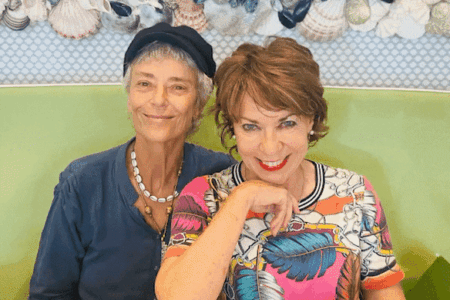
Still, I wanted to talk to that one woman whose experience of surrogacy was as close to perfect as possible. Linda Kirkman will always be, at least to me, Australia’s most famous surrogate mother. Linda and I first met (at least on the phone) in 1988, not long after she bore Alice for her sister Maggie. The agreement between Linda, already a mother of two, and Maggie was strong. Every outcome was considered. What if Linda didn’t want to relinquish Alice after birth? If ever there was a person who’d thoroughly considered what surrogacy might mean – in the moment and down the track – it was Linda.
She is, as you can imagine, very comfortable with the idea of surrogacy. It’s worked out very well for her family. But she also recognises that it’s not that way for everybody.
“Any industry that involves the potential exploitation of humans must have policies and oversight to ensure people are treated well … we don’t want children to be seen as property that can be trafficked.”
My own fear is that, as a result of the inquiry, rules around surrogacy will be loosened. Which might suit those who want to buy a baby. But you’d have to ask, would those changes be in the best interests of the children? Are we turning kids into commodities?
Commercial surrogacy is banned in this country. And, for those who don’t know, the surrogacy laws in NSW, Queensland and the ACT also make it a criminal offence for their residents to travel overseas and engage in commercial surrogacy. As I understand, there has never been a prosecution for accessing commercial surrogacy.
As with any commercial transaction, lots can go very wrong. If the ALRC report goes in favour of compensated surrogacy, the name change won’t make it any safer. And it won’t protect the babies, the children or the adults.
Let’s honour Sonia Allan, eminent legal academic in surrogacy law, who died in March. Her last letter to Justice Bromberg asked the inquiry to consider the interests of the children. They are the ones who suffer. We can’t ban surrogacy. But please, please, let’s protect children from being just another transaction in our commodified lives.
Jenna Price is a regular columnist for The Sydney Morning Herald and The Age.
Get a weekly wrap of views that will challenge, champion and inform your own. Sign up for our Opinion newsletter.
From our partners
Read the full article here