





 Markets
  Weather
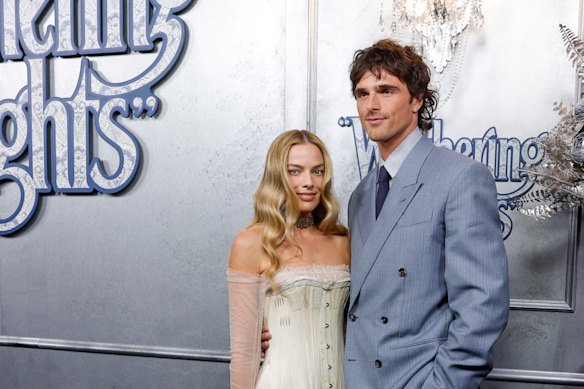
It’s hard to believe it now, but Emily Brontë – Victorian oddball, dog-torturer and now-famous authoress – paid to have her novel Wuthering Heights published.
After several rejections, in 1847, Emily and her sister Anne Brontë received an offer from Thomas Newby, of Cavendish Square, London, to publish their two novels – Wuthering Heights and Agnes Grey – in a three-volume book.
The sisters paid Thomas Newby £50, to be recovered after sufficient copies had been sold.
Their ultimately-more-famous sister Charlotte was still shopping Jane Eyre to publishers, and she was privately horrified by the subject matter of her wild sister’s book.
In her excellent biography of Charlotte, British author Claire Harman writes that the elder Bronte sister found Wuthering Heights “profoundly disturbing and difficult. Why was it so violent, so impious? Where had these brutish characters and coarse action come from?”
Wuthering Heights, the recent scare-quote film version of the infamous book, has already made more money than Emily (and Anne) could ever have dreamed of – it has amassed nearly $160 million in box office sales globally since its release on Valentine’s Day.
We don’t know a lot about Emily Brontë, but it is clear she was unconventional, deeply strange and antisocial. Every time she left her home on the remote Yorkshire moors, she grew ill, so much did she hate the outside world.
She also seems to have had a sado-masochistic relationship with her beloved (and despised?) dog, Keeper, a part-mastiff that she beat so savagely, on at least one occasion, that the dog was “half blind, half stupified”, according to Charlotte Bronte’s first biographer, her friend Elizabeth Gaskell.
There is only one dog in Wuthering Heights, by British feminist film-maker Emerald Fennell, and it remains unharmed. This is a blessing – in the book, Heathcliff hangs Fanny the spaniel, the beloved dog of his wife Isabella. It is an act of cruelty which, in the modern era, we recognise as one of the abuse tactics that comprise what we call coercive control.
Wuthering Heights has had some very unfavourable reviews, and not all of them are from Bronte tragics who object to the film because it is not faithful to the book.
From the film’s opening, in which we hear the sounds of what seems to be a man climaxing, only to discover it is actually a man being tortuously hanged, it is clear that we are not in Victorian England any more.
We are in a strange, hybrid place, where the tropes of Victorian England and the Bronte oeuvre – sweeping dark moorlands, tight corseted dresses, the ubiquity of death, the class system and fancy manor houses – are chopped up, set to electronic music, soaked in sickly colours and TikTok-ified so that while you can’t look away, you wish you could.
I winced in the hanging scene – how could you not? But mostly I winced at the non-subtlety of the thematic set-up. We get it, we get it! Sex and death are fatefully intertwined!
Cathy and Heathcliff, with their mutual obsession, will drive themselves to oblivion.
But just in case we don’t get it, we are subjected to the post-hanging scene, where the filthy (literally) peasant villagers who have been watching the execution proceed to get all horny with each other.
Even a spectating nun is left heavy-breathing, awakened by erotic forces she doesn’t understand.
The character list of Wuthering Heights is heavily pared back so we can focus on our romantic heroine and hero.
But there is no pretence that we are watching faithful renditions of Cathy and Heathcliff, two of the most unique characters in literature.
We are watching Margot Robbie and Jacob Elordi pretend to be those characters, in a half-serious, half-arch way that is compelling but tonally weird.
Both actors are brilliant, but their celebrity is why we are here, and it is why the film has taken that $160 million in box office sales.
Their faces (and bodies – much has been breathily written about Elordi’s chest, biceps, general groin area) are the point of the movie.
Beyond their faces, there is not too much going on except a lot of sex on moors, up against gritstone rocks and in carriages (absolutely not a feature of the book).
There is also a liberal dose of cruelty and a thread of sadomasochism, which is definitely faithful to the original text.
As many have pointed out, Wuthering Heights (Emily’s version) is not a love story; it is a tale of obsession, class, violence, abuse and intergenerational trauma.
It is also very much a story about race and the knock-on effects of colonialism, but Fennell shucks off all that by making Heathcliff white.
Therein lies the insoluble tension of adapting such a book in the contemporary era, especially if you’re trying to make it a romance and market it to heteropessimistic Zoomers.
Heathcliff has been softened into a brooding Byronic hero, but in the book, we are left in no doubt that he is a damaged, sadistic, insane and deeply violent man.
He is of indeterminate race, but he is definitely not white.
How to depict an abusive hero, who is cruel to animals, and is also a person of colour, in the age of both woke and Donald Trump?
Too hard. Hence, while Elordi’s Heathcliff enters into a sado-masochistic marriage with Isabella Linton, there is a scene where he explicitly asks for her consent to humiliate her, and she gives it.
When she is later depicted in her degradation, we are reassured she is in on the joke because she winks at us. And Fanny the spaniel is left out of it all.
Last month The Atlantic published a story about film studies professors who lament that their students’ attention spans have been so ruined by the internet, they cannot sit through feature-length films.
It’s not just film studies students who are suffering thus – most people I know confess the same thing about themselves.
In that way, Wuthering Heights is the perfect movie for the moment – flashy and attention-grabbing, fast-paced, celebrity-driven and fun.
As for its confused sexual politics, well, that only makes it more relevant.
We live in the age of heterofatalism, where men and women are famously estranged.
And Heathcliff and Cathy hate each other as much as they love each other.
We live in the age of TLDR – and Wuthering Heights is the filmic embodiment of that acronym.
Ultimately, though, who cares?
The box office numbers say it all, and that such an acclaimed director would take on this classic tells us everything about its enduring relevance.
As Robbie told Vogue: “I believe you should make movies for the people who are going to buy tickets to see the movies. I’ve never ever been on set and thought, ‘What are the critics going to think of this?’.”
Jacqueline Maley is a senior writer, an author and a columnist.
The Opinion newsletter is a weekly wrap of views that will challenge, champion and inform your own. Sign up here.
From our partners
Read the full article here