



 Markets
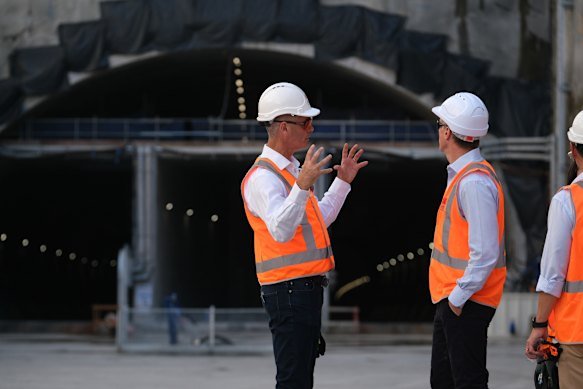
Michael McGowan reports that NSW Premier Chris Minns wants to cut community consultation and environmental red tape from infrastructure projects (“Premier says ‘insane red tape’ holding back projects”, May 5). This same red tape has been developed over decades by previous state governments following previous disasters, particularly during the ’60s and early ’70s, after many building collapses, deaths, environmental devastation and natural disasters that continue to the present day. Previous state governments, following these disasters, required councils to provide and maintain local environmental plans to protect the public, heritage buildings, our environment and save costs through good planning. Over the past decade, various state governments have been changing the rules for their advantage at the community’s expense, such as failing to do proper planning in the case of public transport and road infrastructure. Red tape may result in delays, but it encourages better planning and outcomes for future generations to be safe and appreciate better conditions, with less ongoing expense. We need more proper planning and less political “kneejerk reactions”, where there is no community consultation or following of existing guidelines (developed from experience). This government needs to do more planning, with more public consultation, before acting. Brian McDonald, Willoughby
New housing developments, particularly in newer outlying city areas, need all kinds of infrastructure to make life “liveable” (“‘Planning disaster’ left growing region without enough schools”, May 5). These areas are often populated with young, growing families, so public schools should be at the planning core. Instead, we have had decades of missed opportunities from authorities. Look to most newer developments and the Catholics and other Independent schools have already earmarked a school for the future. Oran Park, in its early origins, is a case in point. The state schools are always way behind in land purchase, buildings and development. Families have already chosen their brand, and if options are not available for the public system, then there is no real choice. It is the fault of various NSW governments over decades, but it is our young families who are paying the price. Janice Creenaune, Austinmer
The premier should be careful before cutting community consultations. It will become a back door for unscrupulous developers. We all need schools and stations in our local area, but what about other developments such as large data centres that will use this loophole? There are already back doors being used to fast track and cut out communities. State significant developments even cut out councils. The government should understand that this can be a good opportunity to come away from their ivory towers and listen to real people. Sometimes it is only the community who can see past the promises of big riches. Elizabeth Darton, Lane Cove West
‘Rewarding’ roads not the rule for all
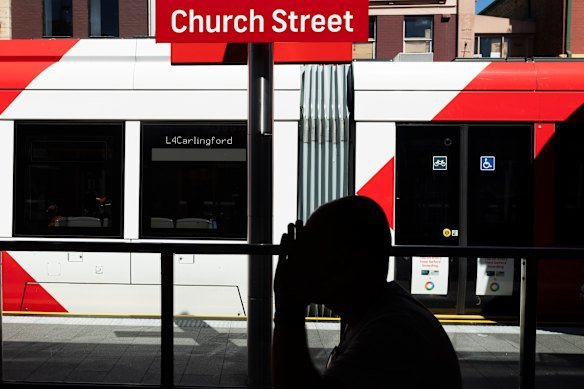
Today’s correspondents rightly decry the lack of planning in many of Sydney’s big new transport schemes (Letters, May 5). It’s evident in the small ones too. One end of the Parramatta Light Rail (PLR) line lies at Carlingford. Surely it could not have been beyond the wit and wisdom of those who planned and designed that line to extend it to Epping? That way it could have provided an interchange with both heavy rail and Metro lines, rather than (as at present) PLR passengers having to find their own way between Epping and Carlingford. It’s not as though the connection would have been hugely expensive, either – given that the Metro line through Epping was originally designed as a heavy rail connection between Epping and Parramatta, passing through Carlingford; a lot of the tunnelling has already been done. David Clark, Springside
Tony Simons (Letters, May 5), “population growth” is already “being diverted to Newcastle”, then Maitland and beyond. We are fortunate enough to have significant road infrastructure funnelling traffic off the M1, as well as major road upgrades to the corridor joining the two cities. It makes living out of Sydney even more rewarding for this “expat”. Ann Babington Thornton
Thank you, Steven Lee, for your list of missed opportunities of transport projects in the greater Sydney region (Letters, May 5). They are all good, but they amount to a great deal of money. Meanwhile, those of us in the Central West don’t have a decent highway to connect us to the metropolitan area as the government prevaricates about the cost of a single tunnel to bypass Victoria Pass. Bill Kierath, Bathurst

Judge Snowy 2.0 by that other icon’s record
For such a complex engineering project, Snowy 2.0 is progressing well (“Leaked videos show flooding in Snowy 2.0″, May 5). The original concept from the 1970s, which was then rediscovered by Malcolm Turnbull and commenced by him, has had the usual setbacks of such a huge undertaking. Tunnels always leak water, especially during construction. I would encourage all Australians to embrace it. I recall the huge problems in building the Sydney Opera House, with the original cost estimate of £3.5 million ($7 million) increasing a record 15-fold to a final cost of $102 million. Was it worth the effort and cost, of course it was. Most of the digging on Snowy 2.0 has been completed, and the electrical components are arriving onshore as planned, and once it is done, it will work well for 100 years. Peter Kamenyitzky, Copacabana
Tax decisions will shock the young later
Younger generations are being hoodwinked by the Albanese government (“Labor insiders coy on tax cuts”, May 5). Voters in their 20s and 30s think they will benefit from the increased tax on people buying investment properties. However, when they reach 40 to 50 years of age and start thinking about how they will fund their retirement, that is when the penny will drop and they’ll recognise that they’ve been duped. By this time, the PM, Jim Chalmers and this cohort will be long gone from politics and today’s younger generations will be lumbered with the consequences. Gosh, are they in for a shock. The only ones who will come away with some degree of wealth will be those who get an inheritance when their property-owning, non-SKIing (Spending Kids’ Inheritance) Baby Boomer parents and grandparents pass away. That’s if these Boomers have any money left over after paying for their aged care. Riley Brown, Bondi Beach
The proposed tax changes to EVs are sensible and continue the government’s commendable support for a transition to electric vehicles (“EV tax breaks to be slashed from April next year”, smh.com.au, May 5). Changes to the fuel efficiency standards has meant more, cheaper EVs are now available for ordinary Australians, and the tax incentives on these will continue as we move towards our 2030 emissions reduction target. Philip Cooney, Wentworth Falls
A vote for independence in Farrer
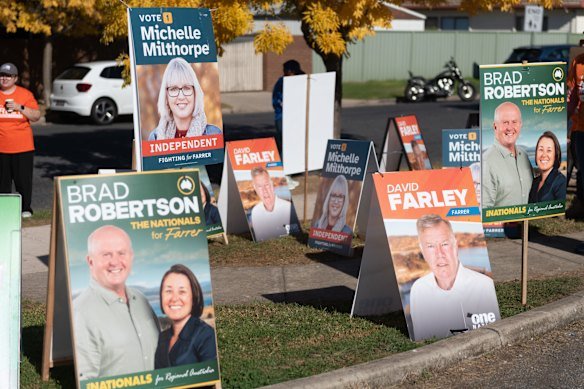
What a dismal statistic: 75 per cent of One Nation’s state and federal representatives bailed out within a single term (“One Nation tension over candidate”, May 5). What are the odds, then, that David Farley – who has flipped from the Nationals, sought preselection for Labor and supported independent Michelle Milthorpe at the last election – will stay the distance if elected? If he does win Farrer, it will be due to the hypocritical decision of the Liberal and National parties to preference Farley over Milthorpe, despite their constant criticism of One Nation and its candidate. Clearly, their fear that Milthorpe would be harder to unseat in the future is because she would be a better local member, and would represent her electorate’s interests without being forced to vote along party lines. Alan Marel, North Curl Curl
Japan and Germany help build axis of democracy
The quotes about those forgetting the lessons of history being doomed to repeat them are true. However, Peter Hartcher (“Decades after WWII, axis has turned”, May 5) clearly shows us that both Germany and Japan, those historical “axes of evil”, have not forgotten those lessons. They have learnt. They have rebuilt and prospered. Now they see the clear and present dangers of this new age. They are working hard to build a new axis consisting of “full democracies” like Australia. Acknowledging the threats posed by failed democracies and autocracies we need to join Japan, Germany and other like-minded nations in building a vibrant, strong and united axis of strength. Andrew Raymond, Parramatta
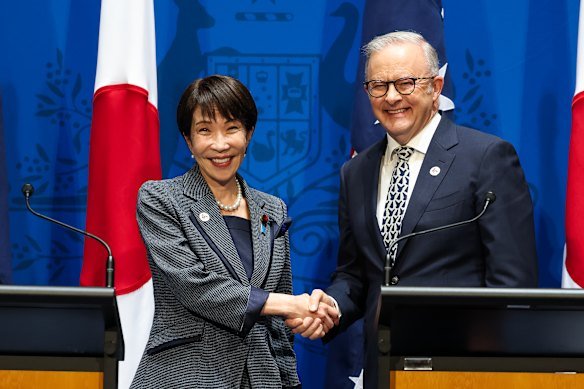
When I was young, it was beyond even the craziest dream that a female Japanese punk rock drummer cum PM could be discussing “bilaterally” heavy metal music with our PM (“Japan to test weapons in Australia as ‘quasi allies’ deepen co-operation”, May 5). I’d know I was dreaming if they were filmed skateboarding together in the parliamentary forecourt, or am I dreaming now? Andrew Cohen, Glebe
Time for subs Plan B
It makes complete sense that Australia should have a Plan B should AUKUS falter (Letters, May 5). In a world that is increasingly unstable and nations seek to bolster their defensive capabilities, it seems increasingly unlikely that we will receive our promised subs on time. The main benefit of the proposed Plan B of purchasing Japanese submarines is that the decision on when and how many subs are required is solely in Australia’s control. This cannot be said of AUKUS, where Australia has little to no control on when or if the subs will be delivered. Stuart Leckie, Port Macquarie
Shocking testimonies
Testimonies delivered before the Bell royal commission on its first day of public hearings are even more shocking given the extent to which acts of antisemitism have targeted Jewish children (“Hearing told of teacher’s Nazi slur”, May 5). It may come as a surprise to readers to learn that human rights authorities have no power to act on complaints of vilification or similar abuse unless the complainants are members of the groups who are vilified or abused. I am not Jewish, but mine is among the 7500 submissions that have reportedly been so far made to the royal commission, my having been witness to a blatant antisemitic rant that a Presbyterian minister publicly delivered in a landmark church 25 years ago. While I stridently expressed my repugnance of the pulpit tirade to the wimps of the clergy involved, I was legally disqualified from lodging a complaint of anti-discrimination, being neither Jewish nor of Jewish descent. At present, antisemitism and all other forms of discrimination should not be regarded as an offence against specific communities but against the Australian community at large. Accordingly, as we all have a stake in promoting communal safety and dignity, human rights and anti-discrimination laws need to be strengthened so as to enable any person to lodge bona fide complaints of vilification where it occurs. John Williams, Balmain
Food waste
What a brilliant idea (“The ‘miracle’ food Liaw says is the difference between life and death”, May 5)! The Ready-to-Use Therapeutic Food Plumpy’Nut is available to feed tens of thousands of starving children, and yet 120,000 packets are left to gather dust because of funding being directed into defence instead of humanitarian programs. Josephine Piper, Miranda

We couldn’t have a better ambassador for UNICEF and to represent Australia than the beautifully spoken and knowledgeable Adam Liaw. This little wonder packet seems to have taken a long time (30 years) to come to public attention, but I hope all nations will rethink cutting their humanitarian aid for weaponry, to get on board with these marvellous life-giving packages for the world’s poor kids. It would surprise no one that the Trump administration allowed thousands of Plumpy’Nuts to go to waste with his trashing of government programs. And the poor first lady has been too busy denying unedifying rumours while watching herself on the big screen. So, go Adam Liaw! Australia is right behind you. Helen Lewin, Tumbi Umbi
State of Kirribilli
Residents upset about the state of their park in Kirribilli might want to consider a move to one of the many Sydney suburbs where home owners are untroubled by poorly maintained waterfront parks or those pesky “coastal gusts” (“Shame of the ‘iconic piece of land’ left a mess”, May 5). Colin Stokes, Camperdown
I live a stone’s throw from this patch of land. What an embarrassing eyesore, indeed. Instead of its name Bradfield Park South, surely, “Sadfield Park South” would now be more appropriate. Edward Loong, Milsons Point
James’ living wake
Indian guru Rajneesh used to say decades ago that people say good things after someone dies, but not when someone is alive. It seems a living wake is the answer and could be more popular in the years when people accept death is inevitable and enjoy eulogies given before the death (“ABC filmed living wake that made Valentine’s day with joy, laughter”, May 5). Mukul Desai, Hunters Hill

Final act
I think that your correspondent (Letters, May 5) will find Chips Rafferty featured in Wake in Fright, No. 4 on the list. It was released in 1971, the same year of Chips’ death. Brian Collins, Cronulla
Boomers’ help
I would like to add volunteering to the long list of positive contributions made by ageing Boomers. Although not specifically to the economy, as correspondent Bruce Clydsdale (Letters, May 5) writes, it is a significant (and invaluable) contribution to our society. Salle-Ann Ehms, Glebe
And let’s not forget the Boomers’ significant contributions to the travel industry, the arts and the university courses. Elizabeth Maher, Gordon
Sadly, Bruce Clydsdale, the Boomers’ contribution to the hairdressing industry is thinning. Phil Bradshaw, Naremburn
- To submit a letter to The Sydney Morning Herald, email letters@smh.com.au. Click here for tips on how to submit letters.
- The Opinion newsletter is a weekly wrap of views that will challenge, champion and inform. Sign up here.
Read the full article here