





 Markets
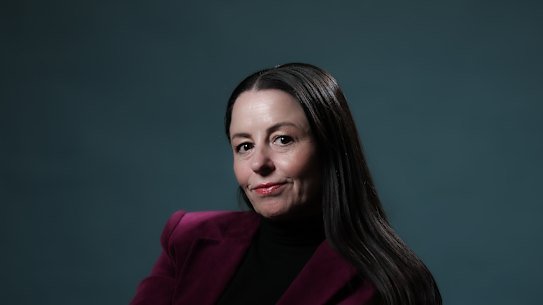
Judith Lucy is a workaholic. A stand-up comic since her 20s – she’s now 58 – and a regular TV and radio performer, Lucy has mined her personal travails including disastrous relationships, too much drinking and the indignities of ageing in her famous sardonic drawl. Life was work, until it wasn’t. In 2023, she had a “burnout”, and she’s turned her discoveries into a book about that deep exhaustion.
In 2023, you had what you call a burnout. What happened? I now look back and the burnout part started when I had COVID in lockdown in Adelaide, and the thought of doing stand-up ever again just made me want to cry and repeatedly punch myself in the face. And then, as luck would have it, I was offered the role of Winnie in the MTC’s [Melbourne Theatre Company] production of Happy Days, which I still can’t quite believe. It wasn’t great timing because I was at a point where I just needed a break, but of course, there is no business like showbusiness, so off I went. When I finished the play, I went to Perth. I thought, “I’m finally going to have a holiday.” I got really sick. Up until that point, I simply didn’t believe in burnout. If I’m really honest about it, I thought, “Oh yeah, sure, people are a bit lazy and weak,” with no judgment whatsoever.
What did it feel like for you? Exhaustion that I had never experienced before. Like I couldn’t get out of bed, was so tired, but also just a kind of grab bag of symptoms. I’m anxious anyway, but that just went through the roof. My digestion’s always been a problem and that went off the charts. Nausea, lack of appetite, freezing cold feet, inflammation went nuts. I was not exactly walking on sunshine. I came back to Melbourne, and my first alarm bell was that I didn’t want to come back to Melbourne, and that was crazy because I love Melbourne. I was meant to have a meeting with my management, which sounds like I’m a great deal more famous than I am. I couldn’t sleep at all the night before, and at some point during that evening, I just went, “Oh my god, I think I have to accept that this is what burnout feels like” because the idea of having any plans, just the thought of it made me want to cry. I went in the next day and said I need six months off, and that was the start of me going, “Holy hell, what now?”
There are a lot of laugh-out-loud jokes in your new book, Well, Well, Well. But it’s quite a serious book, too, isn’t it? I’m very deep, Gay.
You are. It’s taking this experience and thinking, “What is this?” I’ve got to my mid-50s and I just don’t feel happy. I don’t feel fulfilled. I thought work was going to fulfil me, but it doesn’t any more. How can I try to work out how to feel better, or how to feel less shit?
What does work in this era for a middle-aged person who – and a lot of us are like this – just doesn’t feel happy or fulfilled despite outward success? ”Wellness” is such an enormous umbrella. I got into yoga in my early 30s. I’ve always been interested in it for material because some of it is so ludicrous. But I think we all know that half the stuff about wellness, like meditation, like breath work, is great. And then there’s stuff like drinking your own urine.
We all know about midlife crises and mine really seemed to start about 15 years ago, and I don’t know that it’s ever going to end. But a lot of us reach that point in our life where we go, “Hang on a minute, I’ve done all the stuff.” In my case, I obviously didn’t have a family, but I did throw myself into work and worked hard and achieved a certain amount of success, and there were many aspects of my life that I certainly was happy with. But then I just sort of looked around and went, “I’ve never actually asked myself what I wanted my life to look like,” and I couldn’t believe that it had taken me up into my mid-50s to ask myself that.
You mention in the book a few times that wellness can be seen as middle-class or self-indulgent compared to people who haven’t got enough to eat. What did you mean? At the risk of making myself throw up here, I think, no matter who you are, you’ve got to work that stuff out, and once you have your basic needs met – and I am lucky that I am certainly a person who’s had those needs met – everyone needs love and joy and purpose, and I had lost sight of all of that. But yes, I still feel like a wanker. A privileged wanker.
What helped you feel better in the end? I was trying to live differently in terms of the things that we all know that are good for us, like being out in nature, like connection, like purpose. I was also making myself go outside a lot more, making myself take swimming lessons, for example. I was trying to find out what actually brought me joy.
Some things have stuck with you, like yoga and meditation. Can you talk about what they mean to you? Yoga is something I will do forever. I have very bad shoulder issues, and when that happened, I did get into Pilates. I’m a middle-class, middle-aged white woman so of course I do Pilates. One of the big lessons I learnt is to listen to your f—ing body, and that’s why I would recommend yoga if it’s your thing. Meditation came and went a lot more, but since the burnout happened, I’ve really doubled down on the meditation. The more I learnt about my brain, the more I wanted to meditate.
When I read your book, I related to it. It was “Oh, I’ve read that book you quoted,” and “I’ve tried internal family systems” and “I’ve been in a float tank.” Why are women more drawn to try to make themselves feel better, or do men just do it in different ways? Women tend to be more open to trying different things. Maybe it’s still not seen as very masculine by some people, some men, which is a shame because there are some great things out there, and I’ve thought on many an occasion that if straight men knew what going to a yoga class was like: it’s fish in a barrel, guys. You’re like one man with 30 women. We’re all wearing virtually nothing and going into some very interesting postures. Unfortunately, because of the patriarchy and the way of the world, there is a level of stress that women deal with, and I’m not saying that men aren’t dealing with stress, of course they are … but women live with sexism every single day. We’re not allowed to age. We’re not allowed to be overweight. Of course, we’re looking for things to fix us and women are constantly going, “Oh my god, if I have this juice, that could make me look younger,” and “Maybe I’ll lose some weight,” and “Quick, where’s my five minutes of gratitude?”
One of the things you did was a 12-day trip to the Amazon. That’s a much bigger thing to do than float in a tank for an hour. What interested you about that? Tell us about the experience. It may have been one of the worst things I’ve ever done. I was reading Gabor Maté’s book, The Myth of Normal, where he talks about how society is basically making us all sick, which I completely agree with. And then, just out of nowhere, there was a chapter about his experience of going to a place called the Temple of the Way of Light [a shamanic healing centre in the Peruvian Amazon]. I had heard of ayahuasca [a traditional plant medicine] years ago.
What is it? It’s illegal in Australia, I think [ayahuasca is a schedule 9 prohibited substance]. It’s been used by Indigenous peoples for a very long time, and particularly in the Amazon, the Shipibo people, so I was aware of it. I’ve always been interested in mind-altering substances – I mean, to relax, because I’m way too uptight – but also because I am just interested. I thought that if I’m going to do it, damn it, I want to go to the Amazon rainforest.
It’s six ceremonies, using ayahuasca, and all the information you get about it is that this is going to change your life. It is set up in all the literature as a hero’s journey. It’s a plant that has been used for thousands of years and this is going to help clear you of your negative energies. It can help you mentally, physically, spiritually, dealing with addiction, dealing with abuse, all sorts of things.
There were 21 of us from all over the world. We took a bus and a boat, and then there was a trek through this incredible muddy jungle. And then we arrived at the temple, which was incredible. Just very simple huts with fly-wire, just basically a bed, a desk, a hammock, a toilet. Thank Christ, the most enormous pile of toilet paper I’ve ever seen in my life.
So what happened? You do an hour-and-a-half of gentle yoga before (the ceremony). After that, we would wait for the healers to arrive. It was actually a tea that was made from several plants. We would all take it in turn, going up, getting our tea. The first one, we all got just the tiniest amount so they could work out what everyone’s tolerance level was.
The second ceremony was when I really had my head blown off. It’s unlike anything I have ever done, it’s like a tidal wave. I don’t know if anything can quite prepare you for it, but it just feels like it’s crashing over you. Ayahuasca is known for making people vomit or have diarrhoea. I really leant towards the diarrhoea side of things, but that second ceremony I felt pretty great. Even though I was experiencing pain and nausea, (there was also) incredible euphoria. Then it was just this incredible feeling of kind of “Oh my god, everything’s perfect, everything’s inevitable.” I remember the next day just feeling amazing, thinking, “Oh my god! By the end of this, I’m going to start my own cult.”
And then things took a turn. I just got physically really unwell. The diarrhoea was no longer just happening as part of the ceremony. The diarrhoea was all the time. I was exhausted, and the ceremonies were awful. I was in chronic pain, the worst headaches I’ve ever had. It felt like someone had gotten a machete in either hand and was stabbing me in my lower and upper abdomen.
I got back to Melbourne and I kept waiting to feel better. I went to my poor GP – I say my poor GP because I’ve given that woman so many stool samples over the years. She sent me off to a gastroenterologist, and at the point of the gastroenterologist telling me that I needed to take a worming tablet, I thought this feels a long way from enlightenment. After doing some tests, she said, “You picked up two viruses while you were over there, and you’ll never know how much that impacted you.”
Two years after this trip, oh my goodness! It’s like I started with shit, and I’ve ended with it. What happened is, she said, “these viruses have completely stripped your digestive system, and you need to go on the FODMAP diet,” which I have done in the past. I thought, screw that. I know the diet pretty well, so I thought, “I’m just going to eat sensibly, be really healthy, and I’m sure I’ll be able to sort myself out.” But while the other burnout symptoms started to improve, the digestive stuff never ever got better. And finally, a faecal transplant was suggested.
I’ve never heard of it. Had you? Oh yes I had, because I’ve had gut issues for years. It’s basically someone else’s faeces. If your gut microbiome is a mess, you basically want to get someone else’s good gut bacteria.
Good material. Oh boy, it sure is. What a shit show!
How are you now? You’ve moved back to Melbourne. You’ve got digestive issues that are ongoing. Have you got a different approach to work now? We’ll see, won’t we? That is the challenge. I came back to Melbourne because Melbourne is home. I am in a much better place than I was before I went to Perth. The only thing that was really bad was the digestive stuff, and I’m only a few weeks out from that, and they say to you, it takes at least four to six weeks to for it to all calm down, and I am better this week than I have been. I am optimistic that once this calms down, I will actually feel pretty great.
I’ve introduced a lot of new habits into my life, from gardening to cooking to playing the guitar. I’ve got plans to do a show and a podcast, and we’ll just have to see if I can balance it. But I never want to be that sick again, and I never want to not work again. So my belief is that if I keep listening to my body, I can’t go wrong.
Get the best of Good Weekend delivered to your inbox every Saturday morning. Sign up for our newsletter.
Read more from Good Weekend magazine:
Read the full article here