




 Markets
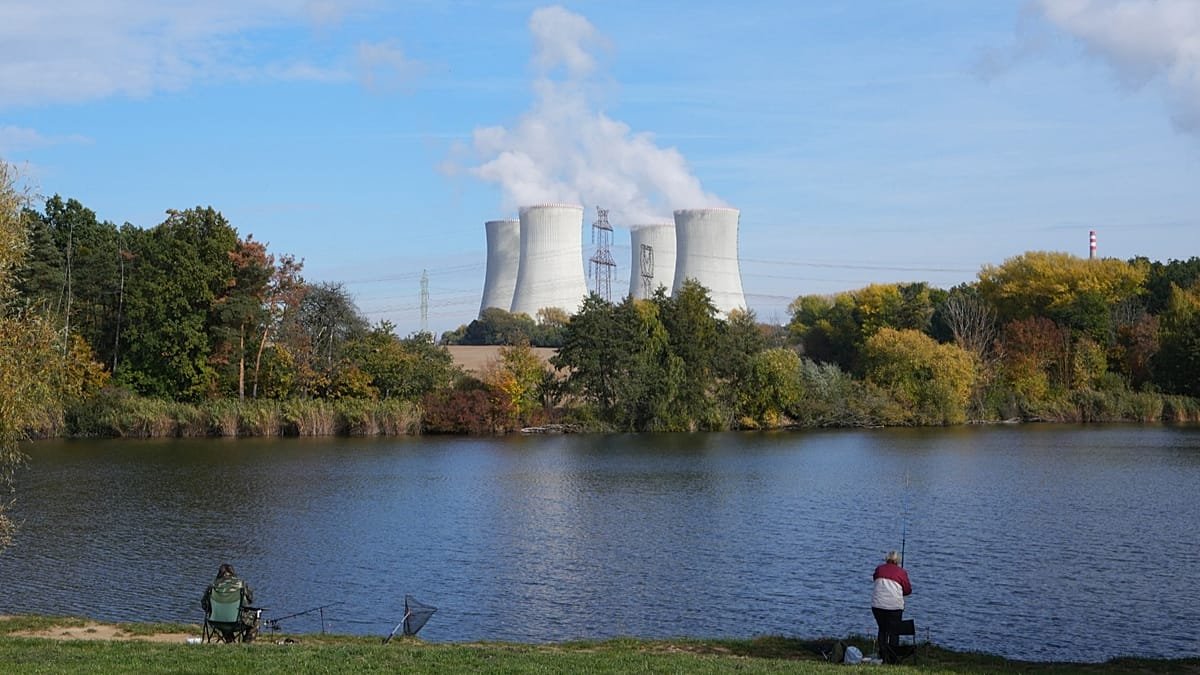
With just 10.5 million residents and an economy much smaller than those of France or Germany, the Czech Republic seems an unlikely leader in Europe’s nuclear revival. Yet, in Brussels and the Visegrád region, Prague is influential, quietly assembling an ambitious nuclear expansion program.
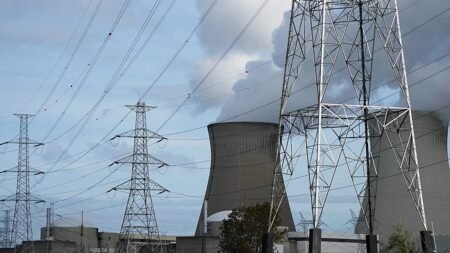
Nuclear energy already supplies around 40 percent of the country’s electricity, generated by six reactors at two plants: Dukovany and Temelín.
The government wants to go much further. Under its updated National Energy and Climate Plan, Czechia has set a target of 68 percent nuclear electricity by 2040, a share that would rival France proportionally, and far exceed the EU average of around 23 percent.
An €18 billion bet on Korean technology
The heart of Prague’s nuclear strategy is a deal signed in June 2025 with South Korea’s KHNP to build two new 1,050 megawatt APR-1000 reactors at Dukovany, costing €18 billion. Work starts in 2029; the first unit goes online by 2036.
There’s an option for two more at Temelín, and a push for small modular reactors (SMRs). A deal with Rolls-Royce was signed on April 24, with approvals targeted by 2030.
The financial architecture is as bold as the engineering. State-owned utility CEZ, which controls 70 percent of the country’s generation capacity, will be backed by state loans covering 70-80 percent of the project cost, a structure the European Commission has approved under its state aid rules. New capacity of up to 2,570 megawatts is planned, potentially vaulting Czechia into the top tier of European nuclear producers per capita.
Crisis as catalyst
Czechia’s push comes as the Iran war and Hormuz closure disrupt LNG flows, sending a shock through European energy markets. This reignites a debate growing since Russia’s invasion of Ukraine in 2022.
President Ursula von der Leyen calls earlier nuclear downsizing a “strategic mistake,” and Brussels has announced a €330 million EU investment package for SMR development. Czechia’s government sees nuclear as the backbone of its coal phaseout, planned for 2033.
The crisis has accelerated an already established path. Prague also considers rising electricity demand from data centres and electric vehicles, sectors needing stable, baseload power that renewables cannot reliably supply yet.
“Nuclear can play a role in supporting our energy system, but we also have to think about whether it is really the core technology, and at what cost,” says Alexander Roth, an expert on energy policy at the Bruegel think tank.
Leading the Visegrád bloc
Within the Visegrád Group, the alliance of Czechia, Hungary, Poland and Slovakia, Prague has emerged as the leading force in nuclear energy. All four countries operate reactors and are pursuing expansion.
It was the Czech tender that first crossed the finish line with the KHNP contract, setting a template for procurement and state financing that Hungary and Slovakia are now eyeing closely. Czechia also exports around 15 terawatt-hours of electricity per year, playing a stabilising role for the wider regional grid.
Public support is strong; 71-78 percent back nuclear expansion, surveys show, among Europe’s highest, with 77 percent expecting a positive national impact. This consensus enables Prague’s government to advance projects of scale and cost that would be controversial elsewhere.
A sceptical voice from Brussels
Not everyone shares Prague’s optimism. Roth urges caution about timelines and costs. Political rhetoric changes, he notes, but economics stay the same.
“The nuclear projects that have been finished in Europe in recent years have been quite expensive and quite lengthy,” he told Euronews. “The question is: can political push change that? I personally have my doubts.”
Roth doesn’t dismiss nuclear entirely; he admits it can help decarbonise grids but stresses the pace of transition. “Europe can build solar panels and wind plants much faster and get off fossil fuels sooner than relying on nuclear, which could take ten years,” he said.
For Roth, the lesson from the energy crises is clear: fossil fuel dependence must end, and the fastest path is not a decade-long nuclear construction program.
The mini-France of Central Europe
France, Europe’s nuclear giant, operates 56 reactors generating 65-70 percent of its electricity. Czechia, with six reactors, produces 30 terawatt-hours yearly from 4.3 gigawatts of capacity.
Per capita, Czechia’s gap with France is narrower, and its 68 percent target by 2040 would place it proportionally alongside Paris, despite its smaller size. The two countries also made different choices on the Dukovany contract. France’s EDF pitched its EPR1200 reactor, promising collaborations with its own new-build programme and integration into a broader European supply chain.
Prague chose Korea’s KHNP instead, largely on price and track record. EDF’s EPR design has been plagued by delays and cost overruns at Flamanville, France, and Olkiluoto, Finland, while KHNP has completed multiple units in South Korea on schedule. The decision was a quiet but significant verdict on the state of the European nuclear industry.
France and Czechia converge in political will and public opinion. Czechia’s 71-78 percent support for nuclear matches France’s 66-70 percent. Both countries use energy crises to bolster domestic low-carbon baseload. They actively push for a stronger EU nuclear framework and advocate equal treatment for atomic energy in green financing.
Obstacles remain. Austria is a vocal critic and has launched legal actions against EU state aid for Dukovany. A long-term nuclear waste site must be picked by the 2030s; cost overruns remain a risk, even with Korean contractors. For now, Czechia’s strategy ranks among Central Europe’s most coherent plans.
Graph & data by Leticia Batista-Cabanas
Read the full article here