





 Markets
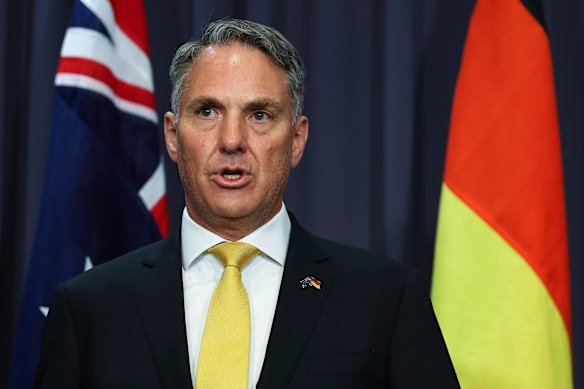
If we are going to spend another $53 billion on defence, it’s high time to include a couple of new items on the national balance sheet that have until now been mischaracterised, much to our disadvantage (“$53b boost to defence in next 10 years”, April 16). We cannot in the same breath declare oil refineries on our soil to be “uneconomical”, and foolishly shut them down, while also claiming fuel security to be essential to the national interest. We must immediately build at least two modern, high-capacity refineries and put them under “defence assets” in the same column as submarines, tanks and planes, which are not purchased for their “economic viability”. Refineries will at least produce a cash flow, which will help reduce the cost of holding them. Whatever government subsidy is required, it will be better value to every single Australian than a few mythical Virginia Class subs, which have already soaked up $1.6 billion without any sign of a return. Graeme Smith, Daceyville
Measuring the adequacy of a nation’s defence capability as a percentage of its GDP is nonsensical. The economies of countries are vastly different, as are their geography and defence requirements. Landlocked nations such as Austria or Zimbabwe need no navy, but Indonesia certainly does. GDP and total defence expenditure can be calculated in different ways. It is illogical to assume that a single, simple percentage comparison provides any reliable gauge of relative “preparedness” between, say, the US and Fiji. It is also false to assume that all defence expenditure is of equal value. Australia has reserved a disproportionately large chunk of its armed services budget for a handful of submarines that will be obsolete before delivery, if they arrive at all. Yet, that vast expenditure is counted as a boost to our international percentage-of-GDP standing. It would be refreshing to hear the retired chiefs of staff for once opine that we are spending too much on defence, not too little. David Salter, Hunter’s Hill
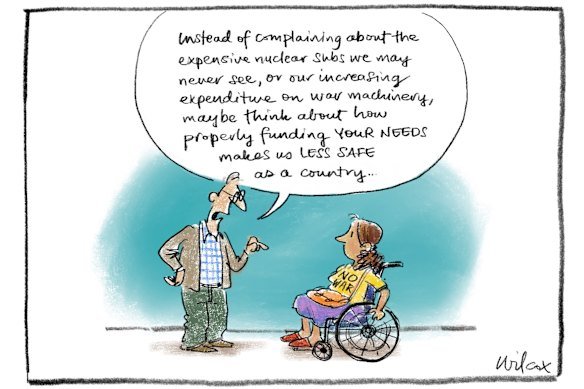
Imagine how the country could be transformed if instead of spending an extra $53 billion on defence over the next decade, the government were to spend that amount on social housing, or making dental care part of Medicare, or making childcare genuinely free, or enhancing social security payments, or all of the above. That would make for an exciting headline – and improve the quality of life of hundreds of thousands, if not millions, of Australians. Alan Morris, Eastlakes
Fuel insecurity
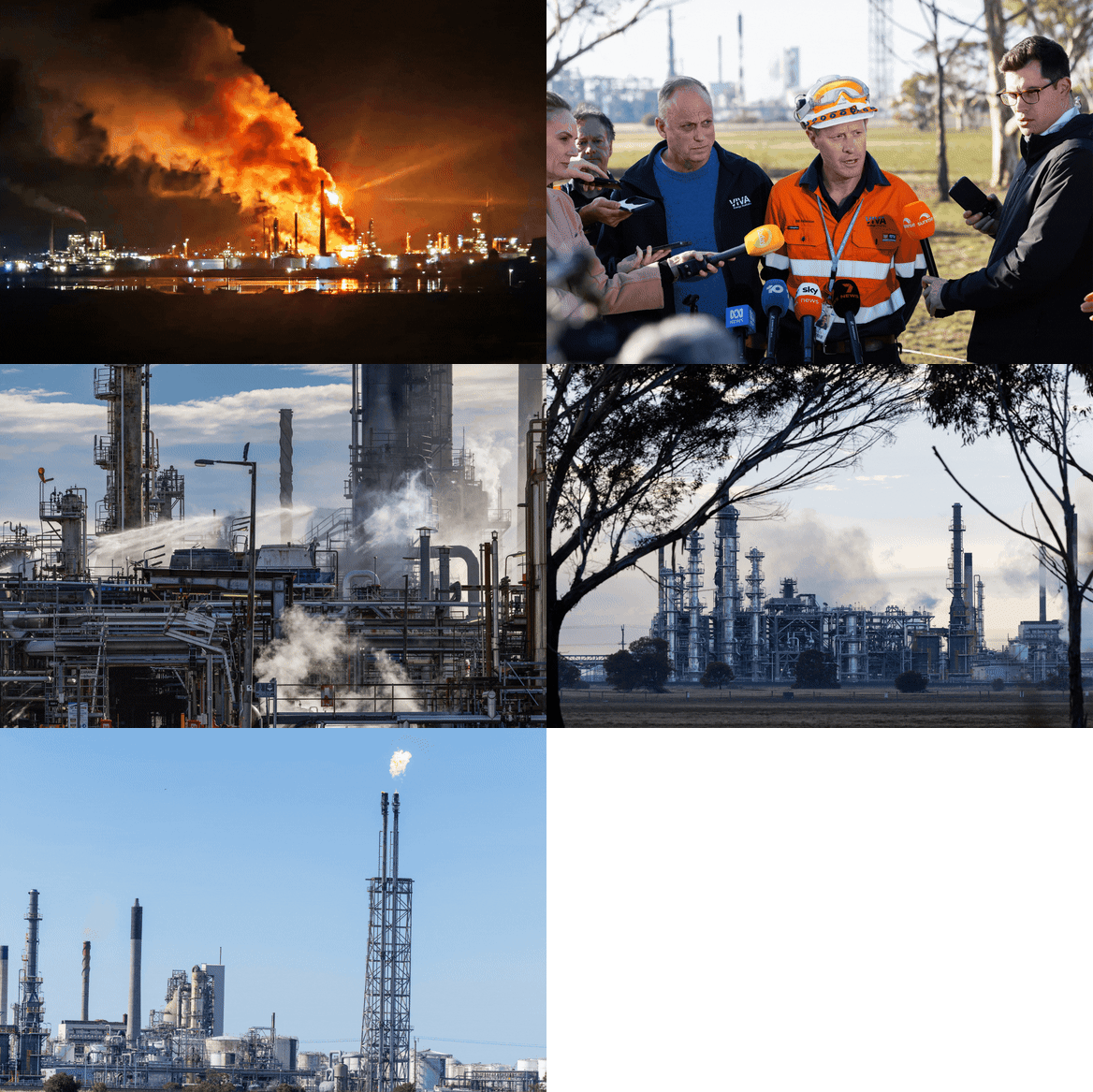
One of our two remaining oil refineries has been rocked by explosions and a devastating fire (“Workers flee massive fireball as explosions rock Geelong refinery”, April 16). Whatever the cause, it demonstrates the folly of successive governments in closing six other refineries. The establishment of new refineries must be a priority, regardless of the cost. Australia cannot rely on overseas fuel supplies, particularly in times of such global uncertainty. Trust in friends and trading partners is not enough to guarantee our future energy needs. Denis Suttling, Newport Beach
Stuck in the past
Home Affairs Minister Tony Burke thought it necessary to challenge Opposition Leader Angus Taylor’s latest proclamations on migration, but he probably needn’t have bothered (“Burke takes Taylor to task over migration”, April 16). Taylor only managed to make it more obvious that the Liberal Party stands for nothing. It’s the “everything you do is wrong because we’re not in government” party. Clearly, this is not working. To be become a serious player again the Liberals should, at the very least, go for renewable energy with their ears pinned back, getting fully on board with the renewable future instead of standing in the way. Climate Change Authority chairman and former NSW treasurer Matt Kean saw this writing on the wall during his time in the Perrottet NSW Liberal government, but they don’t like him any more. Alan Carruthers, Artarmon
I admire correspondent Colin Mcneill’s optimism that the Coalition doesn’t stand a chance of winning government for at least 10 years (Letters, April 16). At the rate they are losing relevance, I give them at most five years before they cease to exist altogether. Victor Marshall, Meander (Tas)
In her letter, Beverley Fine referred to the “political playbook”, while correspondent Greg Vale wrote that Angus Taylor’s utterings came “straight from Pauline Hanson’s and Donald Trump’s handbook” (Letters, April 14). So, I’m just wondering if someone can tell me where I might purchase these tomes, or should I just dust off my old dog-eared undergraduate copy of Niccolo Machiavelli’s The Prince? Phil Haberland, Perth (WA)
Boy, Albert Einstein would not have been able to immigrate, coming from a dictatorship and having poor English skills. Terry Meller, Bondi Junction
Blunt instrument
Thank you, Saul Eslake, at last someone is talking sense (“Another interest rate rise will tip Australia into a recession we don’t have to have”, 16 April). Someone who doesn’t automatically assume that there must be a rise in interest rates when they see inflation, whatever the cause. Someone who recognises that petrol prices don’t rise just because people have too much money to spend. Someone who sees that people mostly have to buy fuel whatever the price. Someone who realises that people are already doing it tough without having to cope with a rise in interest rates as well. Someone who knows that a rise in interest rates might do more harm than good. David Rush, Lawson
The RBA often responds to rising inflation by increasing interest rates, apparently to make people spend less. But spending less is difficult with prices rising all the time, especially during this fuel crisis. Unfortunately, we have no choice but to spend more money, not on a new car but on basic essentials like groceries and rent. I strongly believe there must be a better response to rising inflation, but all too often the RBA pulls the interest rate lever. It would be good if Australians didn’t have to wait in dread on the first Tuesday of every month for the outcome of the bank’s meeting. Susan Dean, Ashfield
Shock wave
The earthquake near the Cadia gold mine is most alarming (“Locals fear mine caused record-breaking quake”, April 16). The mine has massive toxic tailings dams that could burst, sending huge quantities of sludge straight into the nearby Belubula River. Cadia’s owner Newmont is currently seeking federal government approval to extend mining operations beyond 2031. Not a good idea.
Bruce Welch, Marrickville
Pill can kill
Encouraging a cheap and fast supply of medical care can result in a lower quality service for patients (“NSW pharmacists to prescribe contraceptive pill”, April 15) As a GP, I had a young woman in her 20s die from a massive pulmonary embolism after she got the pill from a medical centre, despite me advising her against it because of specific risk factors. Here’s an idea. Why doesn’t the government put the money it’s spending on pharmacy prescribing into well-rebated, comprehensive annual reproductive health consults with a GP? Let’s also look at areas where specialists have a stranglehold for no good reason, for example the prescription of roaccutane for acne. I think the pharmacy lobby has been skewing the thinking on health planning for too long. Dr Lucy France, Cronulla
I beg to differ with Ashley Berry, who says the role of doctors is being eroded (Letters, April 16). Since when have GPs not had enough to do? My experience is that one usually has to wait days to see a GP, their waiting areas are always full and appointments are rarely, if ever, kept on time. My GP is thorough, skilled and caring, but many’s the occasion I’ve had to negotiate and persevere to make an appointment. It makes me wonder what I would do if I was very sick, rather than just needing a check-up or opinion. The demand for GPs is as high as ever, and a few jabs administered by nurses and scripts issued by pharmacists aren’t going to change that. Meredith Williams, Baulkham Hills

Save our park
It is unbelievable that the NSW National Parks and Wildlife Service is proposing a glamping site at among the fragile sandstone “pagodas” in the Gardens of Stone National Park near Lithgow (“The controversial plans for a stunning natural landscape two hours from Sydney”, April 16). It seems to me the very organisation responsible for keeping our amazing national parks from becoming over-commercialised, and protecting our flora, fauna and unique landforms, is instead trying to do the exact opposite with their proposal. Fingers and toes crossed the public consultation process has been damning of the glamping proposal and NSW Environment Minister Penny Sharpe will not give it the go-ahead. If successful, it would set an outrageous precedent. Margot Vaccari, Berowra
Cardinal sin
Donald Trump is running out of tricks – and friends. His carefully cultivated support from the Christian right is crumbling as a result of his own missteps (“Trump tried to out-holy the Pope. His evangelical supporters are not amused”, April 16). Being accused of blasphemy by former devotees is not a good sign. Calling out the Pope as a fraud and saying he only has the position because of Trump was a step too far. He is committing self-harm with his lack of humility. Making enemies of friends appears to be a lifelong habit, and it’s inevitable that he will end up with none. Geoff Nilon, Mascot
Trump attacked Pope Leo as supporting the “radical left”. Before he portrayed himself as the son of God, someone should have reminded Trump that if anyone was radical left, it was Jesus. Justin Fleming, North Sydney
Will somebody please tell President Trump to ease up. The great stockmarket crash was in 1929. We really don’t need another in 2029 (“Economic nightmare looms as soaring oil prices hit shoppers, businesses: IMF”, April 16). David Sayers, Gwandalan
It is said that politics should never be discussed at social gatherings for fear of causing arguments. Well, that is one thing that Trump has changed. Matthew Boylan, Leichhardt

Billion-dollar drama
Elizabeth Knight is right – the legal stoush between Gina Hancock, Peter Wright’s descendants and various family members would indeed make a great Netflix series, but it would make an even better opera (“One group won the Rinehart v Wright case, and it wasn’t the brawling billionaires”, April 16). All the ingredients are there; greed, avarice, ambition, jealousy, envy, obfuscation and rivalry, just for starters. Can you imagine the gravitas of the soprano belting out an aria about how she had to pay millions to her enemies? How about the baritone lawyer warbling away about his million-dollar payday? A trio of siblings harmonising over their misfortune to be denied their inheritance? And finally a chorus of Rio Tinto businessmen and women lamenting being dragged into the financial vortex? It deserves a libretto by Shakespeare and a musical score of Wagnerian proportions. I sense a blockbuster on the way. Robert Hickey, Green Point
Station worth saving
Hear, hear Coral Button (Letters, April 16). 2SER has long been one of our best community radio stations, showcasing such brilliant programs as Stuart Coupe’s Dirt Music, Vinnie Ramone’s The Outpost and many more. Maybe some of those corporate sponsors who have abandoned Kyle Sandilands and his smutty innuendos might be find 2SER’s passionate team of volunteers and music devotees the perfect way to rehabilitate their brands. Phil Bradshaw, Naremburn
Swimmers first
Every ocean beach with large numbers of swimmers should have shark nets, as the evidence that they protect human life is irrefutable (“Shark problem facing South Africa’s new $70m resort”, April 16). In Durban, South Africa, seven fatal shark attacks occurred between 1943 and 1951. Since nets were installed in 1952 there has not been one, while frequent fatal attacks have continued in other provinces without nets, replicating the evidence of efficacy seen in NSW and Queensland. The NSW drumline catch data makes it clear that great white sharks move away from the netted beach zone between Newcastle and Wollongong. Modern technologies are valuable adjuncts but not a substitute for shark net protection. Of course all marine life matters, but so does human life. Graeme Stewart, Avalon Beach
When one considers that there are about 25,000 homicides and 15,000 road fatalities in South Africa every year, it seems that the ocean is one of the safer places to be. Bad shark, bad, bad shark. Steve Dillon, Thirroul
Expert opinions
If the Department of Education’s Centre for Education Statistics and Evaluation really wants to know what’s happening in public schools, who better to ask than the trained experts in pedagogy – the teachers (“Parents are being asked to score schools. But are they the best judges?”, April 16)? While a survey of parents may provide a different perspective, they are not present for the day-to-day operations of the school. The teachers are well positioned to inform their employers, but does the DoE listen to them? Its repeated surveys are comparable to frequently taking a patient’s temperature, but never providing a remedy for their illness. Mark Berg, Caringbah South
Off the rails
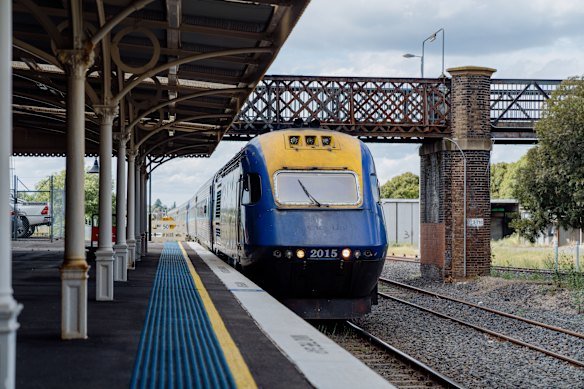
It beggars belief that when ordering a few billion dollars’ worth of long-distance trains, the NSW government did not know exactly what automatic door controls, closed-circuit TV for cabs, instrument backlighting and steps for drivers it required, and that it did not specify them all in the original order (“Design changes may further delay replacement for XPT”, April 16). The failure to state such things in late 2024, under a contract signed in 2019, is plain incompetence, and shows that it is more than the XPT fleet that is beyond its use-by date. A wholesale purge, and replacement, of the upper echelons of Transport for NSW also seems to be in order. Richard Cobden, Dangar Island
Sense saves dollars
I don’t have a car, but I have enough common sense to know that the heavier you load a vehicle, the more fuel it will consume. And we should all have a basic grasp of aerodynamics – Cathy Freeman’s Olympic running outfit springs to mind. And do we really need to be told to take public transport if we want to save on petrol? Please, direct the $20 million to something worthwhile (“Labor under fire for confusing, condescending fuel-saving campaign”, April 15). Helena Solomon, Bondi Beach
Student Joseph Budden has very thoughtfully and factually expressed concern at the government’s $20 million fuel-saving campaign (Letters, April 16). I, like many others, thought it was not the best use of the money at a time when our rural people are being disproportionately affected by the fuel and fertiliser shortages. The suggestions he offered were well thought out. He is a credit to his education and his own sense of right and wrong. Kath Maher, Lidcombe
- To submit a letter to the Sydney Morning Herald, email letters@smh.com.au. Click here for tips on how to submit letters.
- The Opinion newsletter is a weekly wrap of views that will challenge, champion and inform. Sign up here.
Read the full article here