




 Markets
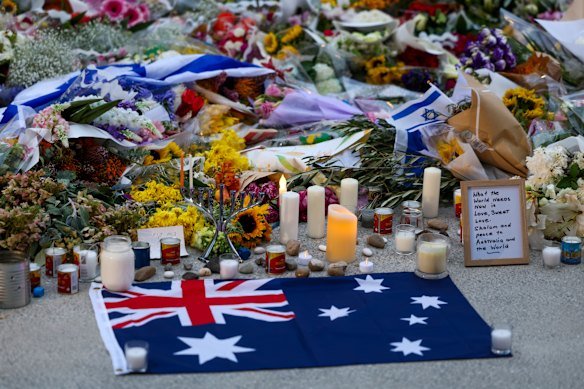
When news broke of the profoundly shocking massacre at Bondi on December 14 last year, my thoughts flew to an event that had occurred almost exactly 11 years earlier, on December 15, 2014. It was then that Islamic State-inspired gunman Man Haron Monis took 18 people hostage at Sydney’s Lindt cafe, the ensuing stand-off with police ultimately costing the lives of two of those hostages and the wounding of three others.
The scale of the Bondi attack was even more horrifying – 15 dead, 40 wounded, including children and the elderly.
But for those of us who’d sat through the Lindt inquest, disquieting echoes are already emerging from the interim report of Justice Virginia Bell’s Royal Commission on Antisemitism and Social Cohesion, which landed on Thursday.
First, the estimation of risk. In the case of Lindt, police fell into the trap of complacency. Monis’ increasingly wild posts on social media prompted 18 calls to the national security hotline in the week before he launched the attack, which were blithely played down by security agencies. On the night of the siege, police convinced themselves that Monis was a narcissist who could be waited out, not the psychopathic killer he proved to be.
In the case of the Bondi atrocity, the judgment of NSW police is again being called into question.
How carefully, for instance, did they assess the vulnerability of an outdoor and widely publicised event such as Chanukah by the Sea, a mass gathering to celebrate a landmark date in the Jewish calendar at a time of clearly documented rising danger?
Bell notes that Jewish security volunteers were seeking a sustained police presence at Bondi and a number of other Chanukah events due to be held that week, warning that the threat level was high. Yet while police acknowledge receiving a request for assistance, they apparently deny receiving any “specific request for dedicated police resources”. In the event, they sent three under-equipped general duties officers and a supervisor with the apparent instruction to on-duty inspectors that there was no need to stay for the duration of the event.
Bell has yet to resolve the competing narratives here, noting that “any differences … cannot be resolved on the information presently available to the commission” and that more will emerge once she starts taking evidence.
Another echo from Lindt is the sign of less-than-ideal collaboration between federal and state agencies. As I noted in my book on the cafe siege, there were palpable tensions at times between NSW police, the defence force and ASIO.
In 2017, Lindt coroner Michael Barnes, who has recently been appointed the Commonwealth’s inspector-general of intelligence and security, urged a review of information-sharing between NSW and federal police, noting a “basis for concern”. So it is with a touch of deja vu that we now see Bell flagging similar issues, with a particular focus on the Joint Counter Terrorism Team (JCTT), the mechanism meant to integrate the efforts of state and federal police, the NSW crime commission and ASIO in thwarting terror plots.
In her interim report, Bell notes a lack of “unqualified support” for the JCTT by NSW police and the AFP, recommending the arrangement be subject to a “specialist comprehensive review” focusing on information-sharing and relations between the participating agencies. More than a decade after Lindt, some mutual distrust appears to linger.
To his credit, NSW Police Commissioner Mal Lanyon welcomed Bell’s recommendations on JCTT operations as “timely” and a “healthy part of the process”.
The recommendations made public thus far are sensible steps. But they tackle the low-hanging fruit. Of the 14 recommendations made in Bell’s interim report, five remain confidential, with the royal commissioner citing national security concerns and the need to avoid prejudicing current criminal proceedings.
That leaves unanswered, for now, the fundamental question of whether the Bondi atrocity arose because of an avoidable intelligence failure.
It is possible we might already have had some answers here if onetime defence chief and former ASIO head Dennis Richardson had been allowed to finish the standalone inquiry he began at the end of last year, when he was asked by the prime minister to assess whether federal agencies – particularly ASIO and the AFP – had performed to “maximum effectiveness”.
But once the royal commission was announced in January, Richardson found his inquiry bundled into Bell’s endeavours. And by March he had abruptly exited the process, saying he felt “surplus to requirements” and would have produced a very different document to the interim report Bell was planning.
Meanwhile, ASIO, thus far, has given an impression of circling the wagons.
In December, when Albanese announced Richardson’s probe, current ASIO boss Mike Burgess issued a bold statement of faith in his own organisation. While expressing “grave regret” that the agency had not picked up on the Bondi plot, Burgess insisted “that does not necessarily mean there was an intelligence failure or that my officers made mistakes”. He welcomed the Richardson review but added: “I expect the findings will give the public confidence that ASIO acts appropriately, legally and proportionately to protect Australians.”
In February, ASIO launched what Media Watch host Linton Besser described as “an extraordinary broadside” when the organisation sought to pre-emptively discredit a Four Corners story that aired claims from an estranged former operative about alleged missed red flags concerning the Bondi attackers.
Burgess has always been happy to laud ASIO’s successes, justifiably so. But it might serve the organisation well to follow Lanyon’s example, and start signalling a little more receptivity to outside scrutiny.
Deborah Snow is a former associate editor and special writer at The Sydney Morning Herald.
Get a weekly wrap of views that will challenge, champion and inform your own. Sign up for our Opinion newsletter.
 Deborah Snow is former associate editor and special writer at The Sydney Morning Herald.Connect via X or Facebook.
From our partners
Read the full article here