






 Markets
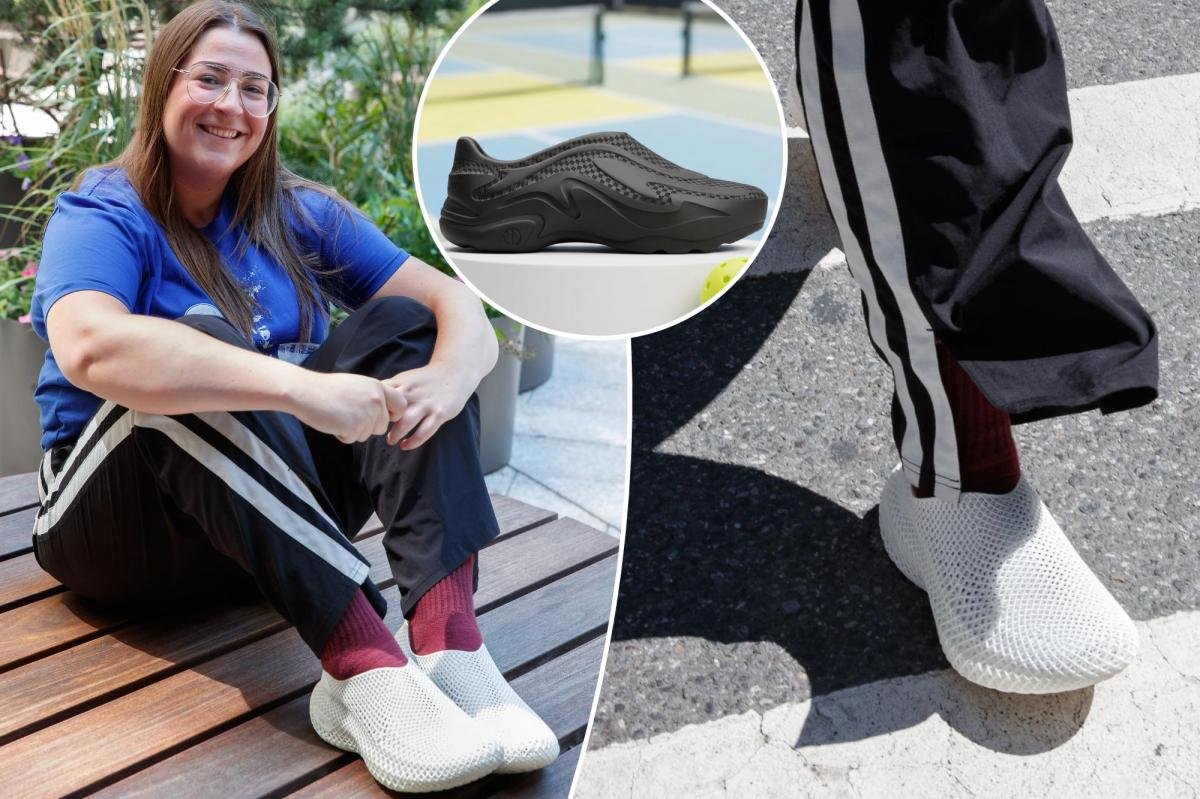
As the wellness world races toward hyperpersonalization, the latest frontier is landing at your feet.
A new wave of footwear companies is using artificial intelligence and 3D printing to create shoes tailored to each customer’s unique foot shape — promising a level of comfort, support and performance that traditional mass-produced sneakers can’t match.
“The era of one-size-fits-most is coming to an end,” Jennie Chen, chief operating officer and cofounder of FitX, which makes custom-made running shoes, told The Post.
In some ways, the footwear industry is returning to its roots.
“For most of human history, shoes were custom-made. It was only recently, in the 1800s, that shoes came in standardized sizing,” said Ben Weiss, founder of Syntilay, which leverages AI and 3D printing to create highly personalized shoes and slides.
While 3D printing had a moment in the 2010s, the technology never fully took off in consumer footwear, hindered by high costs, material limitations, slow manufacturing and complaints about comfort.
But advances in AI are helping companies overcome those hurdles by optimizing designs, speeding up production and reducing waste — while also making customized footwear more affordable.
Syntilay’s AI-designed, 3D-printed footwear starts at $119. At FitX, consumers can snag a pair of custom kicks for the “founding runner” price of $199.
Other players are pushing prices even lower: Zellerfeld, which manufactures 3D-printed footwear from independent creators and major brands, offers styles starting at $79.
At Fitasy, precision-fit footwear costs $260 — still well below some premium standard-fit offerings from industry giants like Nike and Adidas.
The best part? For all these companies, you don’t need to visit a specialty store to get fitted. All you need is a smartphone camera and about 10 minutes.
“Traditionally, getting custom shoes meant visiting a specialized clinic, enduring plaster casting and waiting months for a product that was really expensive,” said Yujun Wang, CEO and cofounder of Fitasy. “Now, anyone can do this by using just their smartphone.”
Wang expects the market for customized shoes to expand beyond elite athletes and people with orthopedic needs toward a broader group of consumers focused on health, wellness and performance.
“By printing a shoe around your exact foot morphology, you are actively addressing the constant, daily micro-stress that ill-fitting shoes can put on your joints,” Wang said. “For anyone in the wellness community, it’s an opportunity to bag those small wins in their daily lives.”
After all, he added: “If you are tracking your sleep, optimizing your nutrition and doing heart-rate zonal workouts — but ignoring your footwear — you can easily undermine the rest of your efforts.”
Like many people, I’ve spent years buying shoes based on a number on a box and hoping they would work. I’ve bought pairs that looked great but left my feet aching after a long day, only to eventually retire them because my high arches and wide feet made them impossible to wear comfortably.
I wanted to see whether AI-designed footwear could actually solve a problem many of us have simply learned to tolerate. So I went through Fitasy’s process to get a pair of custom, 3D-printed shoes.
Here’s what the experience was like — and whether this futuristic footwear really delivers on its promise.
Why one size doesn’t fit all
Launched earlier this year, Fitasy’s Stride 2.0 sneakers look like the love child of nurses’ shoes and Yeezy foam runners.
To order a pair, I downloaded the company’s app, got barefoot and scanned my feet with my iPhone camera, rotating through several angles as the software mapped their contours. Within minutes, Fitasy’s AI had created a digital model that captured my exact measurements.
Tailoring each shoe to the individual foot is important, Wang said, because very few people have perfectly matching left and right feet.
“Some of us may not notice it, but many of us — like me — will feel that difference the second I put shoes on,” he said.
“Foot and ankle pain may not be life threatening — but it certainly is lifestyle threatening.”
Dr. Rock Positano
The consequences can extend beyond everyday discomfort.
“Shoes that don’t fit correctly may cause a variety of problems, such as tendonitis, blisters, ankle swelling and knee, hip and lower back pain,” explained Dr. Rock Positano, a podiatrist and co-founder of the Non-Surgical Foot and Ankle Center at the Hospital for Special Surgery.
That doesn’t mean everyone needs custom shoes. Many people can wear traditional footwear comfortably, he said, as long as it fits properly, provides heel support and leaves enough room for the toes.
But for people whose feet fall outside the typical mold — whether because of unusual width, high arches, flat feet, structural deformities or asymmetry — personalized shoes can make a real difference.
“Customized footwear, with the right input from a specialized professional, is always beneficial to the person wearing it,” Positano said.
Putting the promise to the test
About a month after completing my scan, my shoes arrived — complete with my initials printed on them, a reminder that this was no ordinary sneaker.
Feeling bold, I wore the Stride 2.0s straight out of the box to a three-day biohacking conference, where I logged more than 20,000 steps each day.
To my surprise, I made it through the event without a single blister, and my feet felt noticeably less sore than they typically do after a full day of walking.
With some new shoes, I’m constantly aware of pressure points or places where the material rubs or pinches. With Fitasy’s, though, I mostly forgot I was wearing a pair of experimental sneakers — until someone inevitably asked me what they were.
Their unusual lattice structure certainly caught my attention when I opened the box. Unlike traditional sneakers made with layers of foam and fabric, the open design allows air to move freely around your feet.
That ventilation addresses one common issue Positano sees in modern footwear.
“Often, the materials used to make shoes do not permit adequate breathability and can cause excessive perspiration in the foot, causing uncomfortable swelling and skin inflammation,” he said.
Over the last three months, I’ve put my sneaks through nearly every test I could think of: sprinting to catch the subway, logging miles on the treadmill, standing through long concerts and even splashing through streams on hikes.
They’ve handled it all, with each step feeling cushioned and bouncy — almost like I was wearing the grown-up version of Moon Shoes.
The shoes have also held up remarkably well, showing barely any signs of wear. And because they’re made without fabric, they’re surprisingly easy to clean — a welcome change from the pricey white sneakers I’ve bought in the past that quickly became magnets for dirt and stains.
The biggest adjustment was aesthetic. The Stride 2.0s have a futuristic look that turns heads, but they’re not quite the type of sneaker I’d reach for when putting together a more polished outfit or street-style look.
Whether AI-designed shoes become the next big thing or remain a niche option remains to be seen. But after months of wearing mine, it was hard not to question the idea that millions of people should all be squeezing into the same standardized shapes.
As consumers increasingly look for ways to invest in preventative health, the fast-growing market suggests customized footwear could soon become another piece of that puzzle.
“People often neglect the importance of their feet until they develop a problem,” Positano said. “Foot and ankle pain may not be life threatening — but it certainly is lifestyle threatening.”
Read the full article here