





 Markets
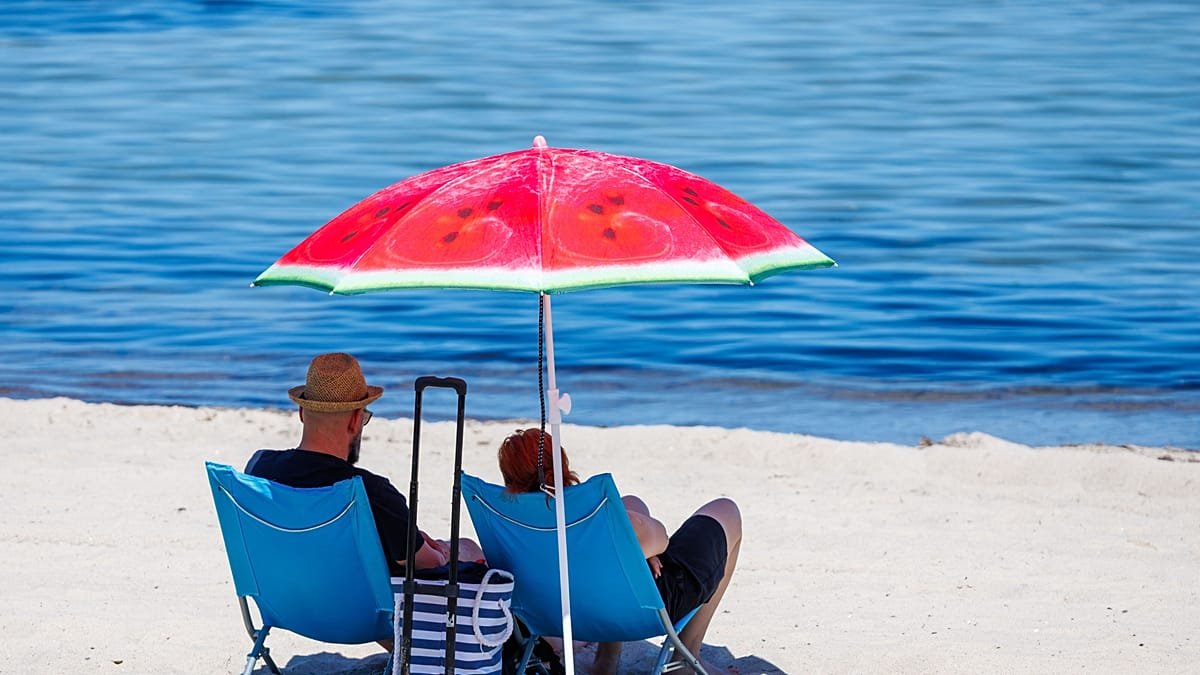
A new report from the European Environment Agency shows that 96 per cent of Europe’s monitored bathing sites met minimum health standards. Even better, around 85 per cent were rated “excellent”, proving that decades of EU environmental regulation are paying off for summer holidaymakers.
But don’t pack your swim gear just yet. Some 1.5 per cent of monitored waters are still rated “poor”. These sites are plagued by persistent sewage overflows and agricultural runoff, where a dip poses a risk of severe waterborne illness.
The EU is trying to tackle these issues, as well as chemical contamination, drought and toxic algal blooms, through stricter legislation and major infrastructure funding, including more than €15 billion for water-system improvements.
Through updated chemical rules and the Nitrates Directive, Brussels is targeting major pollutants while enforcing upgrades to municipal treatment plants to remove microplastics and pharmaceuticals.
How are the EU’s waters?
Though overwhelmingly safe, some EU waters remain classified as “poor”, mainly in inland areas of France, the Netherlands and Belgium, where high population density meets intensive agriculture. Safety also varies by water type: coastal seas are best rated, with 88 per cent considered “excellent”, because large water volumes dilute pollution quickly.
It’s not the same for inland lakes, where the “excellent” figure is 78 per cent. Stagnant waters are prone to nutrient build-up and heat stress. As for EU rivers, only 47 per cent achieved the best rating because they are vulnerable to upstream runoff.
Historically, Europe’s biggest problem was raw municipal and industrial sewage discharged directly into waterways. In the 1970s, the “sewage era” lasted until the 1990s, mass fish kills and severe bacterial outbreaks were common. Then came the Bathing Water Directive, implemented in 2006, and a huge increase in funding for urban wastewater treatment plants. This has dramatically reduced contamination over the past 30 years.
Now, threats to EU waters come from three main sources. The first is agricultural runoff, driven by the overuse of chemical fertilisers, pesticides and animal manure. Rain washes nitrates and phosphorus into streams and lakes, triggering eutrophication: excess nutrients feed toxic cyanobacterial blooms that deplete oxygen and poison swimmers.
The second threat is sewage. Older European cities often rely on combined sewer systems that collect both rainwater and domestic waste in the same pipes. Heavy rain quickly overwhelms them. To prevent flooding, they discharge untreated sewage directly into rivers and coastal waters.
The third issue is the emergence of chemical contaminants. The current Bathing Water Directive only tests for faecal bacteria such as E. coli and enterococci, failing to screen for chemical contaminants. Yet rivers and groundwater are increasingly contaminated by “forever chemicals” (PFAS), microplastics, heavy metals and pharmaceutical residues.
Climate change worsens the situation because warmer temperatures heat the water, accelerating toxic algal blooms. Extreme weather creates a vicious circle in which droughts reduce river volumes, concentrating pollution, before flash floods wash urban and agricultural toxins into swimming areas at once.
The Bathing Water Directive
The Bathing Water Directive protects citizens’ health from risks associated with bathing, such as gastrointestinal illnesses. It monitors the quality of coastal, lake and river waters by testing for two faecal bacteria: Escherichia coli and intestinal enterococci.
Under the directive, member states define the bathing season, identify and monitor sites, and test each one four times per season for faecal contamination. Based on contamination levels, waters are rated as “excellent”, “good”, “sufficient” or “poor”.
Waters aren’t always completely safe because testing is too infrequent. “[…] if you take a sample, you do your analysis, a couple of days later, you have your results. But people have already swum in that water for weeks. So that is tricky. But doing more frequent monitoring is super costly”, Eline Boelee, expert advisor on water and health at Deltares said.
Proactive forecasting can avoid costly reactive monitoring. “At Deltares we also make water quality models which can say, oh, climate change increased temperatures, and this is the impact in the long run, so you need to take measures”, Boelee explained.
Through bathing water profiles, national governments must report on bathing sites, including geological characteristics, pollution sources and bacterial proliferation. Member states must also keep citizens informed of water quality ratings, warnings and swimming bans. Boelee says the easiest way is to “have messages for the general public, saying don’t swim after a heavy rainfall or check if you see a film of algae.”
If a site is rated “poor” for five consecutive years, authorities must identify the causes of pollution and prohibit swimming or advise against it. Fifty-seven bathing spots were classified as “poor” between 2000 and 2024, with only four upgrading to “sufficient” in 2025. Only 88 of the 332 sites classified as “poor” in 2024 improved to at least “sufficient” in 2025.
Europe’s water quality has improved since the directive was revised in 2006. In 2025, “excellent” water sites accounted for 84.8 per cent, up from 80.7 per cent in 2006, while “poor” sites fell to 1.5 per cent from 2.4 per cent.
Last year, the Commission’s evaluation of the directive found that it remains fit for purpose and effective in protecting bathers’ health. Better water management also helped identify new bathing sites, which rose from 10,852 in 1991 to 21,813 in 2009 and 22,010 in 2025.
Who has the best bathing waters in the EU?
Cyprus scored highest, with 100 per cent of its water sites rated excellent, followed by Greece (97.1 per cent), Bulgaria (96.9 per cent) and Austria (96.5 per cent). Citizens in Austria and Greece can even track the cleanliness of bathing sites through mobile apps. Close behind are Luxembourg, Denmark, Germany, Italy and Malta, with up to 94.1 per cent of “excellent” coastal water sites.
Estonia, Poland, Hungary and Belgium reported figures as low as 56.9 per cent, due to inadequate treatment of urban and industrial wastewater. Belgium is addressing water pollution through strict environmental targets and an action plan to reduce chemical contamination, while Hungary and Poland are modernising water infrastructure, including wastewater treatment plants.
In 2025, the share of coastal waters classified as excellent fell slightly to 87.4 per cent from 88.8 per cent in 2024. All coastal sites in Cyprus, Lithuania and Slovenia scored excellent. Estonia reported only 40 per cent of excellent waters, followed by Finland with 55 per cent and Belgium with 63.4 per cent.
For inland waters, the share rated “excellent” remained almost unchanged, at 78.2 per cent in 2025, 78.3 per cent in 2024 and 78.6 per cent in 2023. Austria, Finland, Denmark, Luxembourg and Germany performed best, with up to 96.5 per cent rated excellent, while Slovenia, Portugal, Poland and Spain had fewer than 60 per cent.
While the share of “excellent” river waters remains low at 47 per cent because of pollution, some member states have strengthened national water management. Berlin’s Spree River improved from “sufficient” to “good” in 2025 thanks to upgraded drainage pipes, while French authorities invested around €1.4 billion in infrastructure to clean the Seine. In Budapest, citizens can bathe in designated parts of the Danube thanks to frequent water quality testing and environmental restoration.
The danger of bad water
Swimming in unsafe waters can cause illnesses including diarrhoea, nausea and parasitic infections. Contaminated water can also cause ear and eye infections, including conjunctivitis.
Cyanobacteria can cause severe rashes, hives, swelling and blisters on contact. Ingesting it can lead to headaches, muscle pain and sore throats, while high doses may cause long-term liver damage, kidney failure or neurological problems.
Preventive measures include checking sites on the EEA’s interactive bathing water map before taking a dip and avoiding swimming for 24 to 48 hours after heavy rain, when agricultural runoff peaks.
It is also useful to recognise toxic algae. Cyanobacterial blooms are blue-green algae that thrive in warm, stagnant waters. If the water looks like green pea soup, has thick scum on the surface or emits a musty odour, do not swim and keep pets away, as these toxins can cause severe skin irritation and stomach illness.
Read the full article here