


 Markets
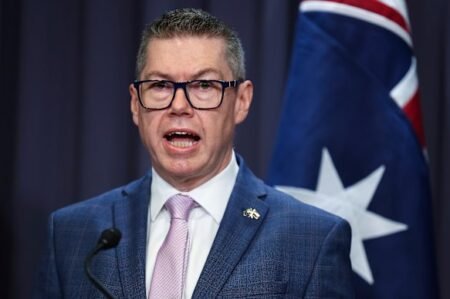
Last week, the prime minister announced that students in 10 more health professions would be paid while on mandatory placement, physiotherapy, pharmacy and paramedicine among them, at around $338 a week. It is real help, and I am glad for my colleagues who will receive it.
Medical students were left out. Again.
According to the Australian Medical Students’ Association, we complete between 2000 and 4000 hours of various unpaid placements across our clinical years. I often do not know my timetable for the end of the week or the month. Activities begin at 7am and some fall out of hours or on weekends. Classes are rescheduled repeatedly on short notice.
Our placement sites move between suburbs as far-flung as Liverpool and Randwick, and some peers commute two hours each way for a class that runs for one. None of this is anyone’s fault; most medical schools’ timetables look like this, and it is because clinicians cannot tell us on Monday what their Thursday workload will look like – they do not know either. My university is doing its best to educate us inside a health system with no capacity left in it.
But the effect on us is the same, regardless of fault. You cannot choose your class timetable. You cannot pick up day shifts at a casual job on a timetable you receive the night before, or sign a lease when you do not know which part of Sydney you will be sent to next month. And the city we call home boasts a median rent of $824 a week, with renters handing over a record third of their income.
I adjudicate debating in public schools, tutor privately, some of it pro bono, and shoot video on weekends. I love all of it, and I am barely holding on to any of it. Paid placements would let me scale that back by choice rather than lose it by attrition.
If you are supporting yourself, or a parent, or a sibling, or living three suburbs from a train station and without a car, this schedule does not inconvenience you. It selects you out. That’s even before you apply, when six years as a student does not look survivable. Then, during the degree, come the failed years, the deferred courses, the quiet withdrawals that never reach a workforce statistic. Among First Nations medical students, attrition runs as high as 45 per cent. They are 4.2 per cent of those entering medicine and 2.3 per cent of those graduating. That gap is not a mystery.
Then the crushing costs go to work on the ones who stay. On the first day of medical school, you want nothing more than to be a GP, giving back to the underserved community in which you grew up. Six years of debt and unpaid labour later, the goodwill has drained out of you. Forgoing your regional hometown to fight for a metropolitan specialist training position with double the expected salary now starts to look less like a betrayal and more like simple arithmetic. We are not only filtering who becomes a doctor. We are shaping what kind of doctor they can afford to become.
People will tell you medicine is oversubscribed, and they are right. But subscription is not representation. We are not short of medical students. We are short of the students who would do the work this country most needs. Only 15.6 per cent of us say we are heading for general practice, while emergency medicine and rural generalism are scarcer still, and students entering medicine from the lower socioeconomic deciles are roughly twice as likely to be practising in a disadvantaged area years later. And yet, knowing all this, we persist with a system that structurally excludes the students most likely to become the doctors we need the most, leaving the rest of us to wonder out loud why Mount Druitt and Moree cannot keep a bulk-billing GP.
To its credit, this government has done plenty for primary care. Bulk-billing is up almost five percentage points in a year, there are now 137 urgent care clinics, and it is funding the largest GP training program in Australian history: 2000 trainees a year by 2028. But you cannot fix a leaking pipeline by widening the far end. Funded training places do not help if the students who would have filled them left in third year or finished medical school in a financial position prohibiting them from even considering lower-paid regional work.
I am not asking for sympathy. When I complain about a commute to someone who has waited 11 months for a specialist appointment, I hear how it sounds, and they would be right to be unimpressed. A lucky few of us, myself included, do not need the payment to survive, and can reassure ourselves that we will, eventually, be well paid.
But the chimera of a bright future does not dismiss the costs of today. What we ask for is simpler and cheaper than the alternative: put clinical medical students into the Commonwealth Prac Payment on the same terms as everyone else, and fund the healthcare system such that clinical teaching is not something exhausted senior doctors do in the gaps.
Because the alternative is a profession selected on whether our parents could afford it. And a profession staffed by junior doctors already burnt out on the first day they are handed the pager.
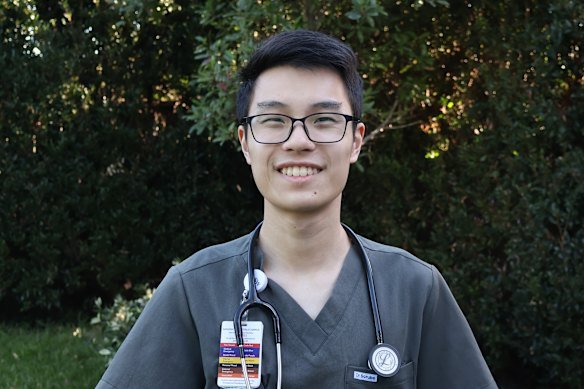
Joshua Chan is a third-year medical student at UNSW.
Get a weekly wrap of views that will challenge, champion and inform your own. Sign up for our Opinion newsletter.
From our partners
Read the full article here