





 Markets
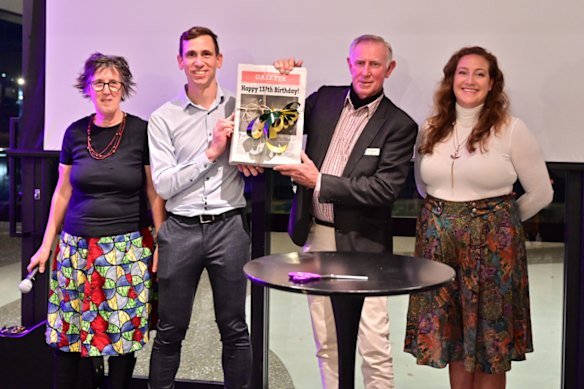
The Hawkesbury Gazette’s 137th birthday bash last July was a party that very nearly didn’t happen. Only two years earlier, the newspaper was consigned to the dustbin of publishing history after its owner, Australian Community Media, pulled the plug amid falling readership, rising costs and rampaging tech giants such as Google and Facebook.
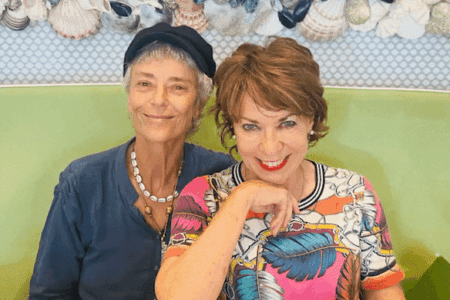
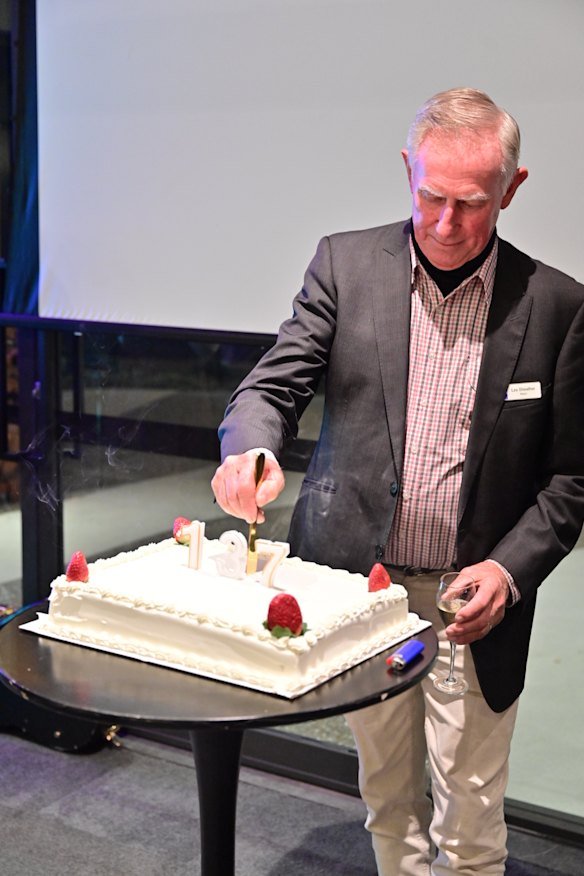
Its surprise resurrection in July 2025 under new owners Kooryn Sheaves and her partner Lionel Buckett had defied the odds, and the great and the good of Sydney’s north-west fringe gathered to celebrate at swanky North Richmond venue The Lakehouse. Proceedings hit a crescendo when the local mayor, Les Sheather, cut a giant birthday cake with strawberries on each corner and unwrapped a bundle of newly printed 32-page copies of the reborn Gazette.
Fast-forward nine months and the mayor who cut the cake that happy night found himself signing an extraordinary letter to the paper. The Gazette, the April 28 letter advised, was to be immediately banned from attending council meetings in person. The edict extended to all council buildings and facilities, and applied not just to Sheaves and Buckett but all employees, agents or contractors of the newspaper.
The reason? Hawkesbury City Council had concluded that the Gazette’s coverage was so biased, so factually incorrect, so agenda-driven and in some cases so defamatory that it represented a serious risk to the psychosocial safety of councillors and staff. Citing bullying and harassment, Mayor Sheather and acting general manager Will Barton said they were duty-bound under the Work Health and Safety Act to take the drastic step. Finally, the letter warned that if the Gazette turned up in defiance of the order, police might be called.
“We didn’t take this decision lightly,” Barton says. “But for me, the safety and welfare of our staff outweighs other considerations.”
At first glance, the decision represents a remarkable intrusion on press freedom by a council afraid of deserved scrutiny. It has certainly been framed that way by the Gazette in recent days, and in coverage by other media curious about the fracas.
However, the battle between the two is less cut and dried than it seems. While the council is far from perfect, the dispute raises serious questions about how the paper operates, and whether Gazette 2.0 produces the sort of solid reporting that typified the old.
It also offers a glimpse into how the void created by the retreat of traditional media is often filled by so-called community or citizen reporters, some of whom are less enamoured by journalistic norms.
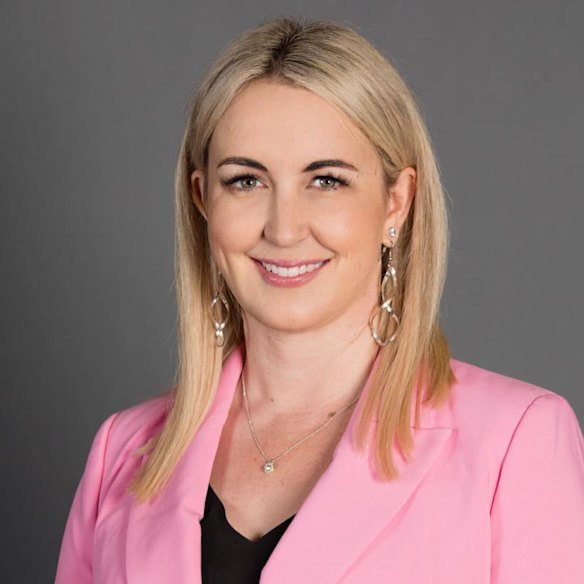
“It is not journalism,” Hawkesbury deputy mayor Sarah McMahon says of the Gazette. “Let’s all stop pretending that this is a newspaper. This is actually two people hell-bent on causing destruction.”
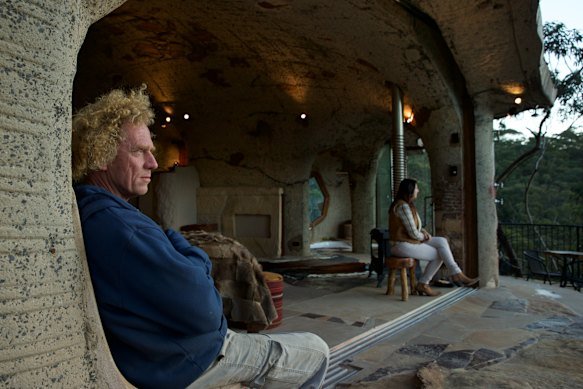
Sheaves, a former TAFE teacher, and Buckett, a sustainable builder and operator of the “Love Cabins” ecotourism business in Bilpin, brought the Gazette back from the dead with zero journalistic experience. That is not unusual in citizen journalism, or even the entry ranks of traditional media, where life experience is considered a positive.
What is unusual is the way the paper goes about covering organisations it has beef with. The masthead seems obsessed with the Hawkesbury council, publishing stories about it of a frequency and tone well beyond what might be expected of a local paper. The council alleges the Gazette is “engaging in agenda and person-based bullying and harassment in order to influence council business”.
The Gazette largely operates on a contributor model and lists some – but not all – authors on its website. The majority of critical articles carry no byline, meaning readers are in the dark over who has written it and whether the author has any conflicts of interest.
Sheaves offers a curious excuse when challenged on why she runs anonymous articles. “People are worried about being personally targeted,” she says of her various contributors. “They’re running businesses, or they’re doing other activities, and they don’t want to put themselves in the target for possible retribution.”
In a later email, Sheaves adds: “My own view is that readers should primarily engage with the quality, accuracy and substance of the reporting rather than becoming overly influenced by personalities or preconceived views about individual contributors.”
Deputy Mayor McMahon, who studied journalism at university, says none of that “passes the pub test”. “The irony in being happy to throw stones and hurt people, but not wanting to be hurt or held accountable for what you’ve done, blows my mind,” she says. “If you’re scared to put their name to something, then that suggests you know you’re doing the wrong thing.”
Other highly critical stories about the council rely heavily on the views or assertions of “observers”, “critics” or “stakeholders” without ever saying who they are.
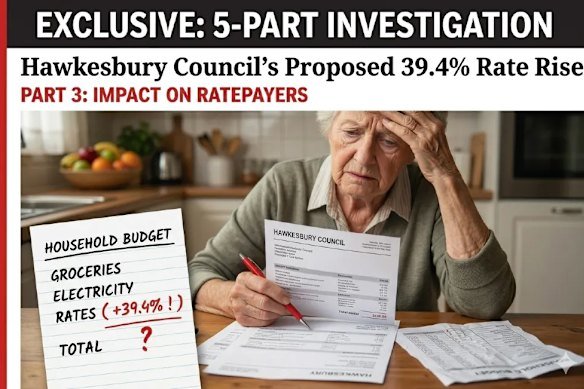
Last month, the paper ran a five-part “investigation” into the council’s proposed 40 per cent rate hike written by Bob Gribbin, a retired IBM consultant who unsuccessfully ran for council in 2024. The series was reasonably balanced, but Gribbin was arguably not an independent observer because of his failed bid and prior commentary. In December, he was quoted in a Gazette article saying, “all I want for Christmas is a new council”.
In other articles, contributors are often quoted as locals or business figures without any disclosure that they also write for the paper.
Buckett, who does not write for the Gazette but is sometimes quoted in it, is a member of the Labor Party, and Sheaves has tried to join the Greens. Asked whether this is problematic given the paper they purchased is covering a council made up of Labor, Liberal and Greens members, Sheaves says she has never hidden her political leanings.
In a traditional newspaper, many of these practices would at best be frowned upon, most likely prohibited by a watchful editor, or even become the subject of a complaint.
The Gazette’s website has a dedicated section about the Australian Press Council that says while the paper is “fully committed to maintaining the highest standards of journalistic integrity and accuracy”, readers who have unresolved concerns can contact the press council.
However, the Herald has confirmed that the Gazette is not a member of the press council, and is therefore under no legal obligation to co-operate with the council or to publish any adjudication by it. Sheaves says she is keen to join the press council, but that it costs too much.
While the Gazette has clear failings, Hawkesbury Council is not an organisation unworthy of press scrutiny. Its general manager Elizabeth Richardson resigned abruptly last month, the council wants to hike rates by nearly 8.66 per cent a year for four years, and Hawkesbury’s elected officials are often at each other’s throats over party politics. The council also became embroiled in various disputes with a now defunct local publication, the Hawkesbury Post, including by rejecting an application by that paper to help sponsor a community festival in 2024.
Will Barton, the council’s acting general manager who co-signed the ban, accepts criticism and scrutiny are inevitable. But as for the Gazette? “I don’t believe that they are a legitimate media outlet in so far as one that upholds the principles, standards and ethics of journalism,” he says.
Barton makes no apologies for invoking psychosocial workplace hazards to ban the Gazette from council premises. He also notes SafeWork NSW issued the City of Parramatta Council an improvement notice in 2023 for failing to provide a psychologically safe work environment for councillors and staff, though that did not involve any issues with local media.
Barton insists that the Gazette can still cover the council via livestreams of meetings, and will still be permitted to send written questions to the media team. “This isn’t about, and it has never been about, trying to quieten the press,” he says. “This is all about responding to and engaging with our obligations to provide a safe workplace.”
For her part, Sheaves refuses to concede that any coverage may have even inadvertently caused harm to council staff. “As people, we are responsible for our own health and wellbeing first,” Sheaves argues. “If something is causing us distress, then it is our responsibility to not read it. If there was some reason you were being forced to read it, I’d have some sympathy. But I don’t because you’re not forced to read it.”
That might be easier said than done – just ask the council’s newly hired chief financial officer. For the Hawkesbury Gazette, the appointment was a chance to turbocharge its criticisms of council leadership via an article that quoted an anonymous “local stakeholder” and unnamed “community advocate” who were worried about churn at the council. The article had no byline. The story, featuring a photo of the council’s new hire who appeared to be of South-East Asian descent, was posted on the site’s Facebook page, with comments open.
A torrent of racial vilification followed. The council called in the lawyers. In a letter seen by the Herald, the council said that the Facebook comments included remarks that “only Australians” should be employed by local government, assertions that the council was now “in Indian” hands, and other statements predicated on skin colour, such as “if it’s brown, flush it down”.
Media organisations can be liable for comments made by third parties on their public Facebook pages. The Gazette removed the comments once they received the letter, but for the council and its staff, the incident was the last straw.
On April 28, the council sent its letter to the Gazette about the ban, and all hell broke loose.
The ban also extends to the Gazette’s “people and issues commentator” Sean Carroll, an electrician who also hosts a program on Hawkesbury Radio.
Independent councillor Nathan Zamprogno, a Liberal Party member before his expulsion in 2023, concedes that the Gazette team have “a bee in their bonnet” about council but defends their right to attend meetings.
“I’m not going to make an enemy of them. What politician would be unwise enough to do that?” he says. “What I’m defending here is their right to do this, good or bad, and I don’t believe that it’s right to pick and choose the kind of coverage that you want.“
Liberal councillor Mike Creed says he doesn’t always agree with everything the Gazette writes but also believes the council is not without fault.
The local state Liberal MP, Ray Williams, is staying out of the stoush but says the story of the Gazette is symptomatic of the broader decline of suburban media. “If I go back 20 or so years, the Gazette was a bible for the people of the Hawkesbury,” he says.
The Gazette says it is transitioning to a not-for-profit model, meaning donations and some other revenue may be tax-deductible. Sheaves argues that such a model makes her the paper’s publisher rather than owner.
The Media, Entertainment and Arts Alliance estimates more than 200 suburban and regional publications have been shuttered over the past decade. Those that are clinging on are doing so with far fewer resources, uncertain futures and the looming threat of AI.
Sheaves denies the paper uses AI “to author” articles, as claimed by some councillors. However, she adds in a written response to the Herald: “While we do not use AI to author published content, we do use it to improve wordsmithing; in fact, it assisted me in drafting this email to you.”
The NSW Office of Local Government says it is examining the dispute.
Start the day with a summary of the day’s most important and interesting stories, analysis and insights. Sign up for our Morning Edition newsletter.
Read the full article here