




 Markets
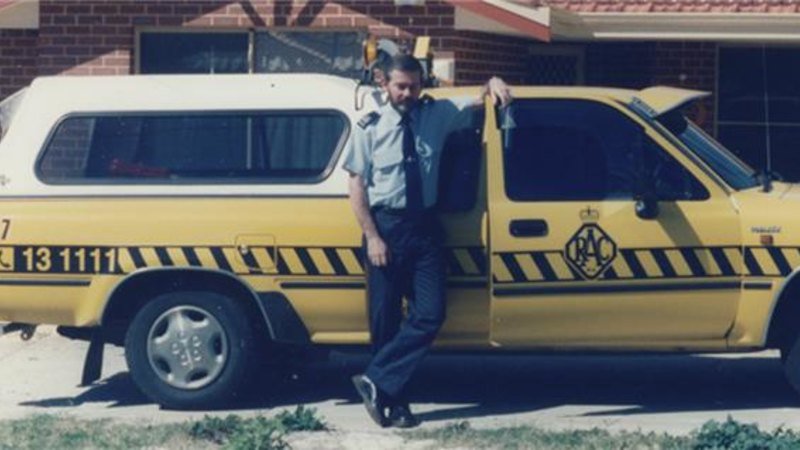
For Malcolm Harris, helping drivers with car problems has been a highlight of his life.
Whether it was people locking their keys – and Christmas presents – in their car, getting stuck in parking lots, or on the side of the road with a flat tire, Harris has been just a phone call away for 48 years.
For half of that time, he worked as a patrol member for RAC, at a time when technicians had to buy their own tools to assist helpless drivers. Now he works as a motoring subject matter expert, testing the system used to take breakdown calls.
“I started in October 1978. So I’m looking forward to my ‘golden gong’ in a year and a half,” Harris said.
“When I first started, we wore quite a formal uniform. We had escort vans, tailored uniforms, wool, polyester shirts, nylon socks, and you had to wear a tie regardless of what the temperature was.
“[There was also] no air-conditioning in the vehicles, of course; we didn’t see those until the mid-80s.”
On May 24, RAC WA patrols will also reach a milestone: servicing drivers with unsuspecting car problems for 100 years.
How assists have changed over the years
Harris has seen roadside assistance evolve dramatically over the past 48 years.
“I suppose the biggest changes over the years have been technology, obviously. And much to every major business’ credit these days, health and safety,” he said.
“Health and safety is certainly at the forefront of everybody’s minds these days, whereas back then, not quite as much so.”
One example Harris gave was the temperature inside the RAC vans.
“The hottest my van got to in the Old Adelaide Terrace carpark on one day was about 63 degrees,” he said.
“We were lobbying for air conditioners at the time, and we bought some scientific thermometers to measure the air temperature.”
Typical roadside assist call-outs were caused by extreme weather, flat batteries and locked keys.
“Most of the vehicles were not fuel-injected, had no electronic ignition, and were very, very susceptible to extremes of weather, be that wet weather or hot weather,” Harris said.
“Cars were far less reliable in the 70s and 80s before those particular technological enhancements.
“And of course, the mechanical components used to wear out because the old ignition systems were coils, points and condensers … whereas modern vehicles, it’s all electronic, and they just don’t suffer from those types of problems that we used to see back in the old days.”
While some problems have changed, others have stayed the same.
“Now, obviously, flat tires, people locking their keys in, flat batteries from leaving headlights on – although it’s harder to leave headlights on these days with modern cars because they tend to turn them off for you – were very common callouts back in the day,” he said.
“But we still go to quite a few people that lock their keys in, and there’s still flat tires. Not all cars have spare wheels these days like they used to in the olden days.”
Some standout callouts that Harris went to over the years were in multi-storey carparks where drivers would often get themselves stuck in tight places, or when drivers would accidentally accelerate in the wrong direction.
“One of the noticeable ones [someone said] I’m just stuck in a car park, so you get out there and ‘stuck in the car park’ was a bit of an understatement because they’d accelerated over a low brick wall and the car was precariously balanced with half the car hanging off the edge of the carpark,” he said.
“[Another time] someone had reversed their car into their backyard again, hitting the accelerator instead of the brake and the car was half in the swimming pool.”
But a positive memory was from when he unexpectedly got to play Santa Claus.
“One Christmas Day I was working, my first job of the day was a car where the member had locked all the children’s presents in the boot of the car,” he said.
“So I was able to be Santa on that day because I was able to unlock the boot of the car quite easily and there were all the presents. The family were very, very happy. It was a satisfying job to go to that one.”
As for why he has continued his career with RAC for almost 50 years, Harris says it’s because of the joy it brings him to help others.
“Being a patrol is a very rewarding job because there’s nothing better than helping people when they need something,” he said.
“When they’re stuck, people are stressed, they’re upset, their day hasn’t gone to plan, and here you are.
“You’re there to help them and most times we get the car going. You’ve generally made people’s days a lot better.”
Read the full article here