



 Markets
If you were in any doubt as to why the government chose this last budget to push through policies Australia rejected at the 2019 election, former Labor opposition leader Bill Shorten has set us straight. It’s a matter of political expediency. What’s changed is the voters’ roll, he told the Betoota Advocate podcast. Young Australians are a larger share of the vote these days.
Labor’s review into the 2019 election loss, conducted by luminaries Craig Emerson and Jay Weatherill, established that “Labor did not adequately acknowledge the legitimate desire of Australians for improved living standards for themselves and their children through their own hard work and initiative”. Rehashing the same policies either suggests that the young Australians Labor is now targeting no longer desire improved living standards – or that hard work and initiative no longer pay off.
Tragically, research I recently undertook into 18-34 year old Australians suggests that, for many, it’s the latter. Everyone still wants a better life. They’ve just lost confidence that it’s within reach.
No wonder. Only economic growth can raise the standard of living sustainably. A budget focused on redistributing wealth instead of laying the foundations for wealth creation tacitly accepts that living standards will stagnate or decline. We no longer live in an opportunity-driven economy.
This only makes sense as an electoral strategy if young Australians are expected never to have enough surplus cash to revolt over the capital gains tax changes which will penalise investors for trying to build wealth beyond their wage. The government had to create carve-outs for start-ups and small businesses because they’re the way many young Australians first express their aspirations. But changes to capital gains tax on investing in those businesses were quietly waved through, on the basis that the government needs revenue.
All this is being done under cover of the one measure most people agree with: limiting negative gearing on housing in recognition that homes are more than just an asset class.
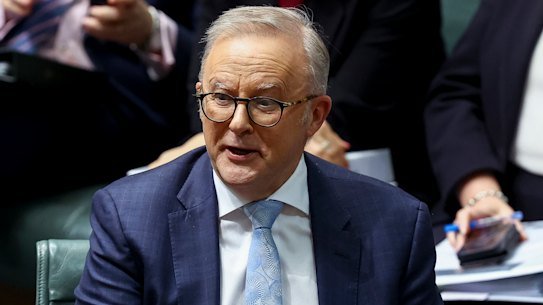
Now it’s just a matter of waiting out the media cycle, as far as the government is concerned. With his budget measures rammed through parliament, Anthony Albanese is hoping Australians will stop worrying our pretty little heads about all that confusing “misinformation”; mathematics and economic analysis and just settle down.
The arrogance is dizzying. I’ve been around political types for long enough to become cynical and jaded. But there are still moments which take my breath away. This was one. Former prime minister John Howard wanted Australians to be relaxed and comfortable. It seems Albanese expects (mostly older) voters to have their affairs all neatly grandfathered, while young people remain broke but bovine.
The commentary might die down, but the effects of the budget changes are already reverberating through the economy. New rules, riddled with the flaws which have already been identified, are hanging out of the national electrical panel like unsealed wires. While ministers holiday, many Australians are left in limbo.
A friend of mine is one of them. Along with the rest of us, she found out last week from independent senator David Pocock about the “widow’s tax” built into the budget, which will affect the capital gains tax payable on joint assets and negatively geared property bought before the budget in the event of divorce or the death of a spouse. The government agreed to amend this legislation to avoid (another) set of unintended consequences – but has deferred doing so until later this year.
Her dad died before budget night. But probate wasn’t granted until after. So what now? What is the status of the property? My friend’s family won’t find out until the government is back from the break and the second tranche of legislation, which cleans up the mess of the first tranche of legislation, finally makes its way through the parliamentary processes.
Would-be home owners are also on edge. House prices have declined, as the government had planned. But the decline is giving both buyers and sellers the jitters. Clearance rates are way down as properties are withdrawn from auction. Nobody wants to sell at the bottom of the market if they have a choice. Buyers are also reluctant to buy into a falling market if they can help it.
The big banks have revised their expectations for house prices down, far exceeding predictions by Treasury. But when he was asked on ABC News Breakfast, cabinet minister Mark Butler wouldn’t countenance the idea that Treasury had got its forecasts wrong. Despite the fact there’s an entire bill pending in the second half of the year to fix the many unintended consequences that have been discovered in the budget papers.
And while house prices are falling, homes are not getting more affordable. The cost of living is affecting households’ ability to borrow or save. And this is where the loss of the opportunity economy will start to be noticed. The government can mandate an increase to the minimum wage, but it can’t mandate more businesses doing the sums and deciding it’s a good plan to open up or take another worker on. The government can grant itself a higher tax take, but it can’t force investors to take risks now they’ll have to give the government a much higher share of any payday.
The government’s political calculation might land, in the short term. The 20-somethings I’ve spoken to don’t really grasp the detail of the changes, or think much about the future. They’re just feeling pain and happy that the government is “doing something” about it. Burn down the whole economy, for all they care. Fair enough. Who’s got much to lose anyway, in those foundational years? Except, that is, for something invisible: the first toehold on the steep climb to building a future.
Young people who graduated into the global financial crisis suffered lasting career “scarring”, according to the Productivity Commission, experiencing long-term negative effects on their wages and occupational choices. The fledgling workers graduating into the aftermath of the 2026 budget might in time wish Labor hadn’t given them quite so much electoral love.
Parnell Palme McGuinness is an insights and advocacy strategist. She has done work for the Liberal Party and the German Greens and is a senior fellow at the Centre for Independent Studies.
Get a weekly wrap of views that will challenge, champion and inform your own. Sign up for our Opinion newsletter.
 Parnell Palme McGuinness is an insights and advocacy strategist. She has done work for the Liberal Party and the German Greens and is a senior fellow at the Centre for Independent Studies. She is also an advisory board member of Australians For Prosperity, which is part-funded by the coal industry.
From our partners
Read the full article here