




 Markets
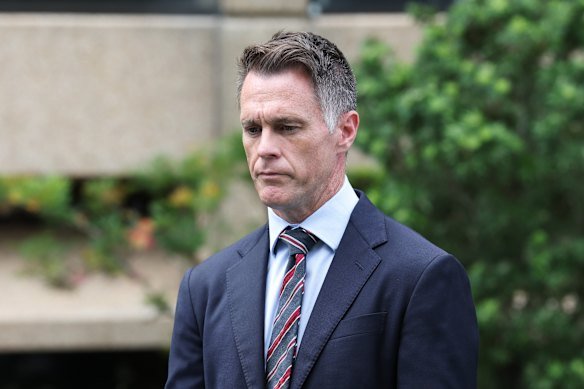
Premier Chris Minns rightly points out the federal government’s failure to address bracket creep as a driver of increased taxation and lower disposable incomes for the workers of NSW (“Tax changes mean premier is putting expansion on hold”, May 21). However, he stands on shaky ground given his own government has failed to index the tax-free threshold for payroll tax – a tax universally hated by economists as a disincentive to private-sector business growth and employment – to CPI or wage growth. If Minns is serious, he could lead the way by acting on this issue. Then he’ll be justified in calling out the feds for their failure to address bracket creep, but until then, he is guilty of the same crime. Chris Morton, Maryville
I nearly choked on my Corn Flakes when a bright spark like Chris Minns so fundamentally missed the basic progressive nature of our tax system. The premier reportedly said those in the top tax bracket paying 47 per cent tax on earnings above $190,000 were working Monday, Tuesday and part of Wednesday for themselves, then working the rest of the week to pay the government. Surely he knows the 47 per cent tax rate is applied only on earnings above $190,000. And if he doesn’t, someone needs to tell him. Michael Clayton, Hunters Hill
Cynical I might be, but I do have to wonder if Chris Minns is more concerned about his own popularity than on his own party and what is best for the nation (“NSW fights Chalmers over CGT reforms”, May 21). After all, there is a NSW election next year and at present he is riding high against his opponents. Perhaps he has never understood or embraced the idea of solidarity, on which the Labor Party is based. Mary Lawson, Marrickville
Raise the GST
Opposition Leader Angus Taylor and the Liberal Party’s policy to reward workers by removing bracket creep or fiscal drag is a structurally important initiative in the quest for a fairer tax system (“Keating defends Chalmers and Albanese amid CGT backlash”, May 21). Income tax provides the majority of the revenue for the federal government. As inflation rises, workers get pushed into paying more tax. This is a disincentive and unfair. To remove bracket creep is costly. Hence, I believe an increase in the GST to 15 per cent is needed. The appropriate measures can be implemented to safeguard those who are genuinely disadvantaged by an increase in the GST. Australia has well below the average rate of GST among OECD nations. Such a move would restore the economic credentials of the Liberal Party and would reward workers by never increasing their income tax. It is not fair to constantly increase the tax burden on our productive income earners. Has the Liberal Party the courage and ability to prosecute this major reform? Bruce Jacob, Carlingford
As I’m sure Jim Chalmers expected, there’s a lot of objection to CGT reforms. However, I support him for being strong and remaining committed to these reforms. Young shareholders and venture capitalists represent the vocal minority of young people. It is the ordinary young workers – nurses, teachers, police, cleaners, support workers, labourers and many more – who earn ordinary non-aspirational wages and need help from the government to achieve homeownership. If the reforms will make more housing available for them, it is a good thing. Katriona Herborn, Blackheath
If ever I doubted that we live in a capitalist country, that doubt has been dispelled by the outraged clamour of self-interest in response to Labor’s budget. Apparently wage earners have to pay a reasonable rate of tax, while others want to invest money and live off the profits with tax concessions that they claim encourage initiative but in fact simply allow them to make more money. I didn’t think that was the government’s responsibility. Eric Scott, Bondi Junction

CGT, negative gearing and private trusts show how the privileged few in this country have ridden on the backs of the rest for so long. Hold the line, Labor – these changes are fair and long overdue. Deep down everybody knows it, but some just won’t give. It’s also time to tax gas exports at 25 per cent and withdraw from AUKUS. We’ve pleaded with you since 2022 for these two changes. You’ll snooker the conservatives if you do, politically and economically. Howard Charles, Glebe
If I “invest” in a horse race and hit the jackpot, I pay no tax on my winnings. So why, when I gamble on shares or setting up a business, should I pay tax on my profits? It’s un-Australian (“Millennial entrepreneurs unite against Albanese’s tax overhaul”, May 20). Maureen Donlon, Wagga Wagga
Doesn’t add up
The Herald’s Brittany Busch notes that Angus Taylor’s plan would cap migration at the number of new homes built – about 213,000 in 2027/28 (“Taylor’s migration cut could be just 5 per cent”, May 20). But that 5 per cent “cut” assumes one migrant per dwelling, which bears no resemblance to Australia’s real household average of 2.4 people. On that basis, the Coalition’s cap would allow around 511,000 migrants – 286,000 more than Labor’s current forecast of 225,000. Far from tightening migration, the policy would permit a dramatically higher intake. Another Coalition thought bubble that collapses once you do the numbers. Tahir Turk, Wamberal
Equality isn’t class war
The “class war” never seems worth mentioning when policies favour the well-off minority (“Albanese now in class war he previously shunned”, May 21). Yet when a government finally responds to pressure to gently level out inequality, out come the class wars again. Class war accusations sank Bill Shorten and his worthy policies, delivering us Scott Morrison instead. May we please hear more about those who will benefit, rather than the whinging from those outraged that their taxpayer-funded profit might be marginally reduced? Remember the pharmacy guild campaign against cheaper medicines, with dark stories of ruin from tearful chemists? Never happened. As a Boomer who has benefited from the old ways, enough is enough. It will be disastrous if the government caves to the newly energised class warriors. Alison Stewart, Riverview
Maybe Labor should head back to its roots and think about the many Australians who live on the poverty line. They have been cast aside for years for not being aspirational, and I would imagine many of them would be thinking One Nation might be a better bet than the two major parties. If Labor was looking for savings it could attack its other nemesis, the payment of excess franking credits, which costs the government about $30 billion a year in forgone tax. This was introduced by Liberals John Howard and Peter Costello in 2001. Social economists suggest that a spend of about $15 billion per annum would significantly reduce poverty. Labor would thus have $15 billion left over to think about how else it might woo voters. If you are wondering, the vast majority of excess franking credits go to the already very wealthy. No surprise there. John Rome, Mt Lawley
Ah, the irony. It appears that Gens X, Y and Z, who for years have criticised us Boomers as greedy, actually aspire to what we have. Mike Kenneally, Manly
Airy-fairy
Most of the gas and oil in Norway is government-owned, with the proceeds used to fund health and education (“Hanson wants gas and oil to look like Norway”, May 21). Those that are not government-owned have massive taxes applied to their profits. I see nothing in Pauline Hanson’s plan that suggests where the money will be spent, but as One Nation is always thin on policy I won’t be holding my breath. Peter Miniutti, Ashbury
Value of vaccines
I graduated from medical school in 1979 and am appalled at the current resurgence of diphtheria in Australia (“Worst diphtheria outbreak in decades crosses state borders”, May 20). In all my years working in hospitals and then in general practice, I never saw a single case of diphtheria. The last case of tetanus I saw was as a medical student. I had only one case of previously undiagnosed tuberculosis in my entire career. I have seen polio only in its aftermath. Contrast this with my childhood experience, when our parents lived in dread of these illnesses, when schoolfriends suffered the ravages of polio or even died from what are now preventable causes. The advent of vaccines against these illnesses was seen as a godsend. The world is now faced with the prospect of more pandemics like COVID-19, but worse still, arguably, with an epidemic of pseudoscience, “alternative truth” and conspiracy theories that serve to undermine faith in vaccines and in science-based medicine as a whole. There is something to be said for a nanny state that enforces childhood vaccination, both for benefit of the individual and the common good. Peter Craig, Dulwich Hill
Homework hatred
Doing homework was always a bugbear for teachers and parents alike but if it was regular and followed up, it did help build a work ethic among students (“Step it up: Parents want to give homework another run”, May 21). Being a teacher myself once, it reminded me of a colleague who had a great episode with homework. At a parent/teacher night, he told one father that his child had not being doing his homework. The father wondered how it could be solved, so the teacher suggested that he offer $2 to his son (it was a long time ago) every time he did his homework. The teacher noted that still no homework came in for a few weeks, then all of a sudden the homework was in every day. At their next meeting he asked the father why it took so long for the plan to work. It was simple, the father explained: “After a couple of weeks of ignoring my $2, I told him every time he didn’t do his homework I would give it to his brother!” Ken Pares, Forster
It’s so pleasing to see parents taking charge of the education agenda again. Should we apply this principle across all areas of expertise? Maybe I should sit down next week with the plumbers coming out to do our drainage to offer my recommendations on laying pipes. Scott Warnes, Suffolk Park
Private health flop
I totally agree with Jenna Price (“Private Health insurance is not worth it, let’s start again” May 21). Why are billions of taxpayers’ dollars used to prop up the inefficient and failing private health industry? Imagine if all that money was funnelled into the public health system, including dentistry, what a world-class system Australia would have. It would not preclude those still wanting to pay personally for private health insurance. Bronwyn Willats, Mittagong
Parking problem
Your correspondent Thomas Walder opposes the Grattan Institute’s parking proposal on the grounds that suburban life requires a car (Letters, May 21). But some limit on mandatory parking must apply somewhere, the only question is where and how much. A blanket position against reducing minimums, untethered from location or context, isn’t an argument; it’s a reflex. Your correspondent assumes every apartment dweller wants a car space bundled into their purchase price. Many don’t, and forcing them to pay for one anyway is its own distortion of the market. A supply of apartments without attached parking would give non-car owners genuine choice, while the vast existing stock of apartments with car spaces remains available for everyone else. That’s a mix, not a war on drivers. Matthew Bartinel, Lemon Tree Passage
Sad choice
I noted an interesting juxtaposition of articles this week. On the one hand, a young rugby league player, tragically diagnosed with MND, who would give up everything he had to be able to lead a normal life, in good health, with his family (“Jai Arrow opens up about MND diagnosis”, May 21). On the other hand, a young swimmer happy to “juice to the gills”, thus wantonly compromising his good health to maybe (a big maybe) win few bucks (“Everything you need to know about the Enhanced Games”, May 21). All round, a sad state of affairs. Kate Coates, Wangi Wangi
Stitched-up
Residents should have adequate time to contest a project which potentially impacts on their lives (“Community consultation times slashed in development overhaul”, May 21). The decision to restrict the time limit to seven days for challenging a development is profoundly undemocratic and unacceptable. Alan Morris, Eastlakes
Short sighted
Federal Labor and the PM say they want to “throw everything” at the housing crisis. Everything, apparently, except properly regulating and curbing an out-of-control short-stay industry at a time of record low-rental vacancy rates (“New calls for regulation in the short-stay market”, May 20). John Mahony, South West Rocks
Words of comfort
I notice the headline “Don’t sugarcoat death” in Thursday’s letters to the editor (Letters, May 21). Surely euphemisms for death are ways in which people and cultures find some comfort. I can’t understand why there is an argument, If you prefer the term “death”, use it. If you prefer (as some Aboriginal cultures do) “passed” or “passed away”, use it. Let people find their own comfort in terms of language. In times of great sorrow, we should not dictate the terminology others prefer to use. Graham Fazio, Cootamundra
Regarding Gail Lloyd’s letter to editor, for those of us who believe in reincarnation, let’s just call it “passing on”. Richard Harris, Hydes Creek
- To submit a letter to the Sydney Morning Herald, email letters@smh.com.au. Click here for tips on how to submit letters.
- The Opinion newsletter is a weekly wrap of views that will challenge, champion and inform. Sign up here.
Read the full article here


