





 Markets
Some couples will do just about anything to keep their relationships alive — even if it means banishing each other from the dinner table.
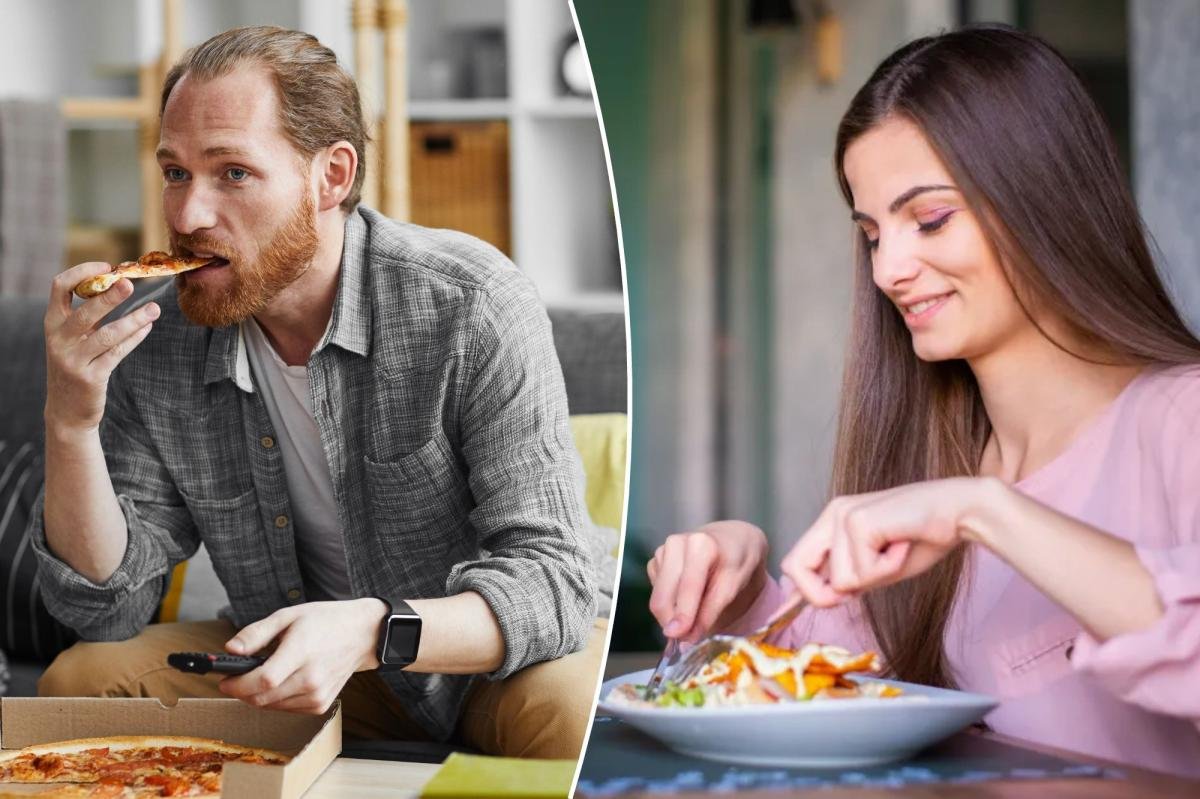
Welcome to the era of the “food divorce,” where otherwise happy couples eat separately, even when living in the same house.
“A food divorce is when two people who live together stop planning, cooking and eating as a unit. Each person handles their own meals on their own schedule,” relationship therapist Erin Pash, founder and CEO of Caveman to Casanova, told The Post.
The idea behind a “food divorce” is simple: Sometimes, breaking bread can lead to breaking up.
Pash said that navigating issues like meal planning and dish duty can add so much stress to a relationship that it might be better to ditch them altogether.
“It’s a decision to take food off the list of things the couple has to negotiate every day,” she said.
And divided dining is on a rapid rise.
According to the 2025 World Happiness Report, roughly 1 in 4 Americans eats every single meal alone — a massive 53% surge since 2003.
Younger generations are driving the shift, ditching traditional breakfast, lunch, and dinner for solo snacking on the run to survive packed schedules and tight budgets.
Pash noted that while the seeds were planted earlier, COVID-19 lockdowns blew the lid off the issue.
“Couples were home for every meal and realized how much friction three shared meals a day created,” she said.
Post-pandemic, mismatched work shifts, meal-prep burnout, strict diets, and the explosion of GLP-1 medications like Ozempic have only amplified the divide. Studies show the burden of meal planning falls disproportionately on one partner, turning dinner into a breeding ground for resentment.
Indeed, 11% of Americans ages 18 and older currently take GLP-1 meds, while 57% adhere to a specific eating plan or diet.
Pash sees this as part of a broader cultural shift among younger couples who are eager to tear up the old relationship rulebook.
“We’ve stopped treating the shared dinner as proof of a healthy marriage,” she said. “Most couples aren’t divorcing over food. They’re divorcing the idea that love has to look like one pot on the stove.”
The trade-off isn’t without risk. A 2026 study found that couples who regularly dine together report fewer depressive symptoms and higher relationship satisfaction.
The daily culinary battle is exhausting. One survey revealed that the dreaded “What do you want to eat?” question gets popped 365 times a year — spending 2 hours and 32 minutes a week on kitchen diplomacy.
Pash insists those fights are rarely about what’s actually on the plate.
“The fight is about who has been silently carrying the planning all week, and who gets to show up with no opinion and then veto the result,” she said. “‘I don’t care, whatever you want’ followed by ‘not that’ is not a food preference; it’s the load showing up as a complaint.”
Bailing on dinner debates can instantly cool off a relationship.
“It removes a recurring fight, returns energy to the relationship, and lets each person eat in a way that actually works for their body and schedule,” Pash noted. “It also defuses resentment when one partner’s diet has been dictating the other’s.”
On the flip side, a food divorce can derail intimacy, especially for the two-thirds of US adults who view food as their main love language.
“If cooking was one partner’s way of saying ‘I care,’ splitting kitchens can feel like affection being withdrawn,” Pash warned.
To survive a trial separation from the dining table, Pash suggests replacing dinner with a mandatory daily check-in — whether it’s morning coffee, an evening stroll, or a 10-minute catch-up after the kids fall asleep. She also advises locking down at least one non-negotiable shared meal a week.
“Separate the food from the time, and keep the time,” Pash advised. “Watch for the red flags: separation nobody discussed, food being used to control or shame, a divided kitchen that mirrors a divided everything else, or meals being avoided because talking is being avoided.”
When one partner feels relieved by the new setup while the other feels lonely, communication is the only way through.
“The relieved partner needs to hear that the loneliness is real, and the lonely partner needs to be specific about what they miss,” Pash said. “It’s rarely the food. It’s the unstructured conversation, the sense of being looked at. You can rebuild that without a shared menu.”
For anyone wondering if separate plates signal the beginning of the end, Pash offers a reality check: “The test is simple: do you still want to be in the same room when nobody has to cook? If yes, you solved a scheduling problem. If no, food was never the problem.”
Read the full article here